This is a cache of https://www.owenscorning.com/en-us/insulation/applications/process-piping-above-ambient. It is a snapshot of the page as it appeared on 2026-01-31T12:18:08.417+0000.
Above ambient underground process piping and equipment | Owens Corning Insulation
Skip to main content

Thermal insulation solutions for underground piping and equipment operating at above ambient temperatures.

The direct burial of insulated pipelines is often the most practical method of installing underground piping systems. This method eliminates the need for costly tunnels, while increasing the speed of installing the piping system.

The success of a direct burial system depends highly upon the insulation system chosen, proper design and proper installation. Some of the key considerations which should be addressed by the design professionals prior to selecting a particular insulation system are:

  • type of system
  • operating temperature
  • soil type
  • pipe length
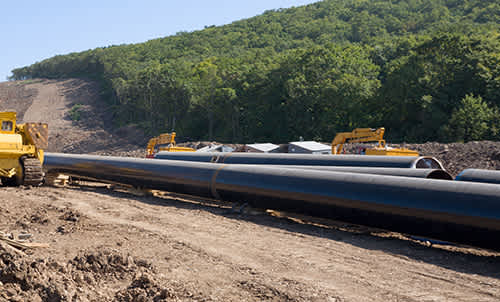
Oil pipeline

A FOAMGLAS® insulation system helps to ensure that the temperature inside the pipes is controlled and kept stable by limiting the heat transfer to the cold soil. In most of these applications it is vital that the temperature is kept constant over the entire length of the piping network to ensure process control.

When a pipe is buried directly into the ground, it must withstand a high amount of compression while also being subjected to moisture penetration.

FOAMGLAS® insulation has the compressive strength to withstand the pressure and possible loads on it, while also being impermeable to moisture. By using a FOAMGLAS® insulation system, one can help limit the risk of moisture penetration to the system, and mitigate corrosion on the piping network.

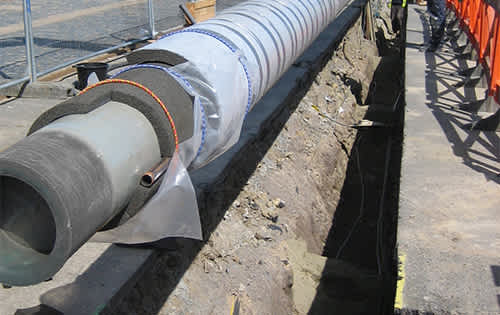
Hot oil burried pipe

Typical configuration for underground piping and equipment operating at above ambient temperatures:

  • One or several layers of FOAMGLAS® cellular glass insulation.
  • An anti-corrosion layer.
  • An anti-abrasive layer.
  • PC® Coating or PITTWRAP® Jacketing.