- Fire
- Commercial
- Blog
Stone Wool Versus Slag Wool Insulation
Understanding Stone Wool Versus Slag Wool Insulation
Stone wool and slag wool are both forms of mineral wool insulation, produced using advanced manufacturing techniques to create durable, high-performance materials. The terms are often used interchangeably or positioned in contrast to one another in commercial and technical discussions. While they differ in composition and origin, the most important factor is that the mineral wool meets the performance requirements of its intended commercial building insulation application through proper testing and specification.
What is Mineral Wool Insulation?
Mineral wool, according to ASTM C168-22 standards, is “a synthetic, vitreous fiber insulation”, and it's made by melting and spinning various inorganic materials, like rock, slag, or even glass, into fiber. The differentiation of types of inorganic materials varies from continent to continent; for example, glass wool is considered a type of mineral wool in Europe and Canada. However, in the U.S., mineral wool is a non-combustible material made with either a slag or stone wool as the base raw material.
What are the Benefits of Mineral Wool Insulation?
Whether the mineral wool is comprised of stone, slag, or a combination, mineral wool insulation benefits include:
● Non-combustibility
● Thermal resistance
● Sound-dampening properties
● Ability to allow vapor to pass through without retaining water
● Resistance to mold, fungi, and pests
● High recycled content
● Ease of installation
While stone wool and slag wool share these core benefits, each type has unique characteristics based on its raw materials and manufacturing process.
What is stone wool insulation made of?
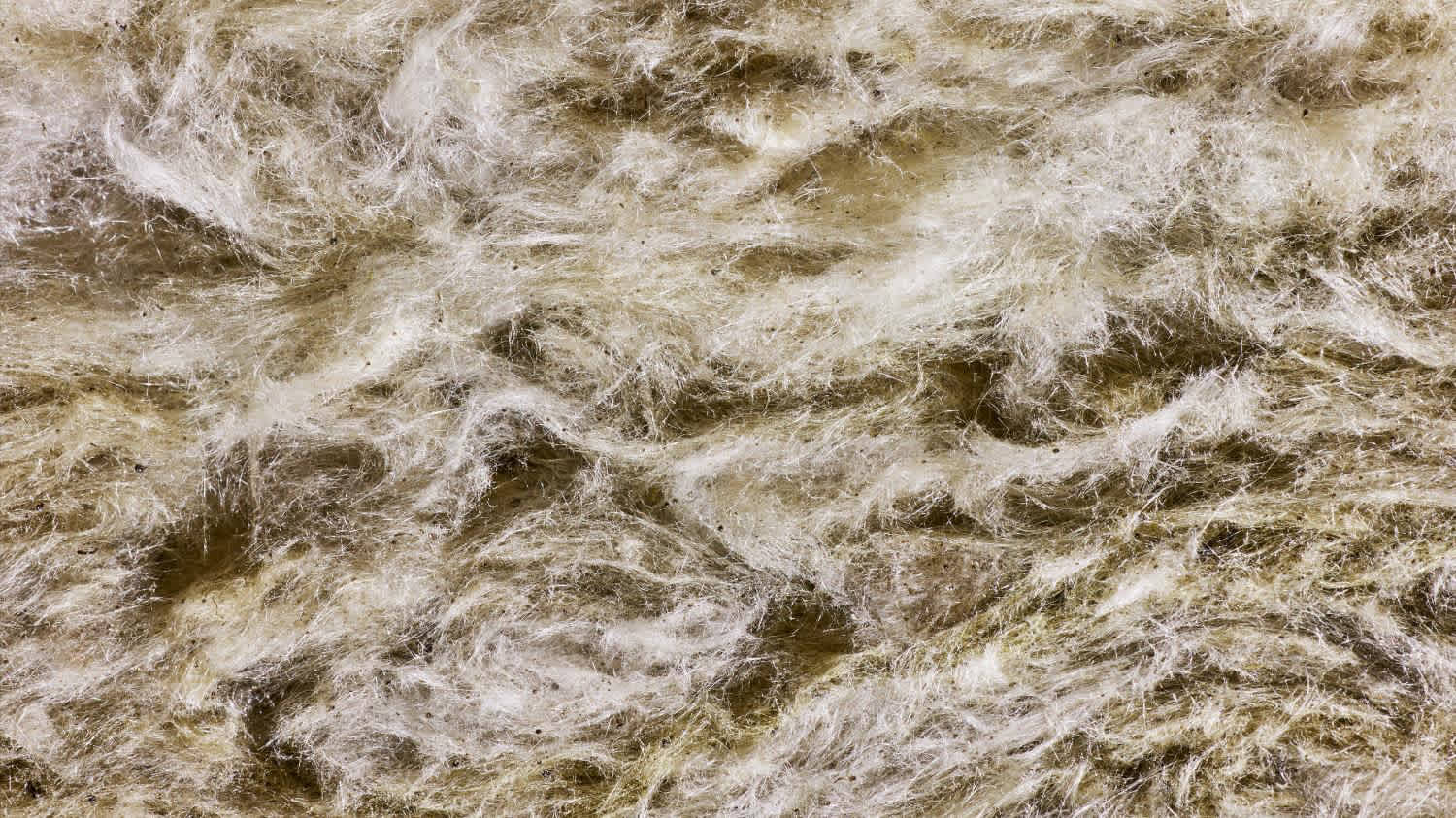
Stone wool is made from mined volcanic rock. This naturally mined rock is called basalt, and it's the major raw material source. The basalt is mixed with a combination of other mineral additives for the makeup of stone-based mineral wool insulation. The rock or stone is melted at high temperatures and then spun into fibers resembling wool.
What is the Difference Between Rock Wool and Stone Wool Insulation?
The choice of terminology between 'rock' and 'stone wool' is primarily based on the manufacturer and geographical location. Regionally, these terms are more common in certain areas. Rock wool insulation is commonly used in the United States, whereas stone wool insulation is more common practice in Europe. However, the process for making this type of mineral wool and its properties are similar whether it is referred to as rock or stone.
What is Slag Wool Insulation?
Slag wool is made from blast furnace slag, a byproduct from a waste stream in the steel manufacturing industry. When iron ore is melted down during the production of steel, once the steel is in a molten lava state, there is a skimming off of the impurities from that process. This byproduct can be used in other products to bring some contribution or attributes that help in other components or other building materials. The molten material, a byproduct of the melted iron, is rapidly spun into fine strands, much like the process used to make cotton candy. Then these strands are cooled to form a fibrous, wool-like substance used for slag wool insulation.
How Do Stone Wool and Slag Wool Insulation Compare?
Although the raw materials of stone and slag differ slightly, their performance attributes are very similar because both products are made from rock-based chemistries. Both offer fire resistance, thermal properties, and moisture handling. Most mineral wool products have a certain combination of stone and slag; it is just the percentages of each type of material that differentiate the proprietary makeup of products and brands.
A Brief History of Stone and Slag Wool
Stone wool was conceptually inspired by natural volcanic activity observed in Hawaii during the 19th century. Scientists and locals observed fine strands of volcanic glass hanging from trees near Mount Kīlauea eruptions, which closely resembled human hair. This naturally occurring material was known locally as lauoho o Pele, or “Pele’s hair,” named after Pele, the goddess of volcanoes in Hawaiian folklore. As described by the National Park Service, “Pele’s hair is formed when liquid lava is propelled into the air, some of which stretches into long, thin strands of glass.” Stone wool was first manufactured commercially in 1870, modeling the volcanic “Pele’s hair” phenomenon.
Parallel to these discoveries, innovations utilizing industrial byproducts led to the development of slag wool materials. The history of slag wool materials dates back to 1840, when Edward Parry in Wales discovered that molten slag could be formed into a fiber-like material. In 1870, John Player patented the steam-jet technique in the United States to spin blast-furnace slag into fibrous insulation. This innovation led to the first commercial production of slag wool in 1871 at Georgsmarienhütte in Osnabrück, Germany.
As manufacturing methods improved, both stone and slag wool gained prominence in the 20th century, particularly for their fire-resistant qualities. The use of mineral wool expanded as building codes began to emphasize the fire safety of buildings, particularly in the 1920s and 1930s.
Firestopping & Mineral Wool Performance
Firestopping is required when a fire-resistance-rated assembly such as a wall, floor, ceiling, or roof is penetrated. This need arises when elements such as plumbing, conduit, electrical wiring, cable trays, or other building systems pass through the assembly, potentially compromising its fire-resistive performance. Both stone wool and slag wool insulation are capable of withstanding temperatures exceeding 2,000°F, often outlasting the steel components of the structures they are designed to protect. Since the material itself is “born in fire”, created by melting natural rock or blast furnace slag at temperatures above 2,600°F, it has a high heat resistance.
This high heat resistance makes mineral wool a trusted solution for perimeter fire containment and other rated assemblies. It is also a cost-effective choice for firestopping applications, helping meet performance requirements without compromising budget. Mineral wool plays a key role in systems tested to standards such as ASTM E2307, which evaluates fire performance in curtain wall assemblies. These performance characteristics have made mineral wool a reliable choice for modern fire-rated construction.
What are Some of the Biggest Misconceptions about Mineral Wool Insulation?
Although mineral wool has a well-established role in firestopping, a few persistent misconceptions can lead to confusion during product selection and specification. One common belief is that stone wool is more sustainable than slag wool because it is made from natural rock. In reality, slag wool insulation may contain more recycled content because it is produced using blast furnace slag, a byproduct of the steel industry that would otherwise be discarded. This approach repurposes material that already exists in the manufacturing ecosystem, reducing the need for additional extraction of natural resources. For projects with sustainability goals, slag wool offers a recycled solution with comparable performance.
Another frequent misconception is that all mineral wool products are interchangeable in firestopping systems. That is not the case. Fire-rated assemblies are tested and certified using specific materials; substituting one insulation product for another, even if it is also made of mineral wool, can compromise the integrity of the assembly. Without proper certification, the substituted product may not respond the same way under fire exposure. This untested component substitution can result in premature failure of the assembly, loss of compartmentalization, and increased risk to life safety. UL certification and strict adherence to tested systems are essential to ensuring that the installed materials perform as intended.
There are also concerns within the industry about untested foreign mineral wool products entering the U.S. market. These materials may not meet the documentation, testing, or traceability requirements needed for use in fire-rated systems. Regardless of where a product originates or what it is made from, mineral wool should always be verified for the specific application through valid certifications and, when necessary, engineering guidance.
Why is it Important to know about Slag and Stone Wool Insulation?
Understanding the differences between stone and slag wool insulation matters because knowing the differences and similarities helps make an informed decision about product selection. Whether one chooses a product composed of more slag or rock, it is essential to know that they are utilizing a quality, tested mineral wool product. In fire-rated construction, these distinctions can have real implications for life safety. Firestopping assemblies are designed to slow the spread of fire, smoke, and heat, allowing more time for evacuation and emergency response. To function properly, these systems depend on tested and certified components, including the mineral wool used in the system.
These assemblies also need to accommodate building movement, especially in perimeter joints and curtain wall conditions. Insulation must perform consistently under thermal expansion, structural deflection, and other shifting forces. Substituting one product for another, even if it appears similar, can lead to misalignment with tested systems and may compromise the assembly’s ability to perform as intended.
Because most buildings are designed with unique conditions, engineering judgment is often necessary to adapt firestopping solutions. During specification, it is vital to ask the right questions:
● What are the code requirements?
● Which ASTM standards apply?
● Do the products align with the tested systems?
● Has the insulation been certified by a third-party testing lab for the intended application?
Effective firestopping depends not only on the type of material, but also on how it has been tested, documented, and applied. Making informed decisions at the specification stage helps ensure systems function as required when it matters most. When specifying stone wool or slag wool insulation, the priority is selecting a quality product that has been adequately evaluated for its intended application.
Product | Primary Application | Key Attributes |
|---|---|---|
Thermafiber® Safing | Perimeter firestopping | Compression-fit, fire-resistant |
Thermafiber® FireSpan® | Curtain wall insulation | Dense, thermal & fire-rated |
Thermafiber® RainBarrier ® | Continuous exterior insulation | Rigid, moisture-resistant |
Thermafiber® SAFB | Interior sound/fire control | Acoustic, thermal, UL-listed |
RainBarrier® | RainBarrier® HC (80) | RainBarrier® HC Plus (110) | RainBarrier® HC Max | |
|---|---|---|---|---|
Type | Semi-Rigid Board | Rigid Sheating Board | Rigid Sheathing Board | Rigid Sheathing Board |
Facing Options | Unfaced or black veil | Unfaced | Unfaced | Unfaced |
Properties | ||||
R-Value | 4.3 per inch | 4.2 per inch | 4.2 per inch | 4.2 per inch |
Vapor Permeable (ASTM E96) | ✓ | ✓ | ✓ | ✓ |
Compressive Strength (ASTM C165) | N/A | 475 lbs/ft2 | 720 lbs/ft2 | 1296 lbs/ft2 |
Meets ASTM C612 | Type IA, IB, II, III, IVA, IVB | Type IA, IB, II, III, IVA, IVB | Type IA, IB, II, III, IVA, IVB | Type IA, IB, II, III, IVA, IVB |
Selecting Thermafiber Products from Owens Corning
Selecting the right mineral wool product requires a thorough understanding of performance testing, certification, and the intended use of the product. That is where manufacturer support and product-specific guidance become essential.
Owens Corning produces a range of insulation products for use in perimeter fire containment systems in commercial buildings. For over 90 years, Thermafiber has produced mineral wool insulation products and maintained a legacy of leadership in advancing mineral wool insulation innovation and fire safety. Our Thermafiber products are the only mineral wool insulation to receive the Department of Homeland Security’s Safety Act designation, which recognizes its role in supporting life safety. The product line continues to innovate with emerging opportunities, including formaldehyde-free options, continuous insulation products, and ongoing efforts to support life safety and high-performance buildings.
Thermafiber offers free, project-specific engineering judgments for perimeter fire containment from the Thermafiber Insolutions insulation consultants team. These recommendations help ensure that insulation is installed correctly and matches the tested firestopping systems required for code compliance. With the right information and the right product, project teams can specify mineral wool insulation with confidence, knowing it aligns with tested systems and supports both safety and performance goals.
References
- Thermafiber Landing Page
- ASTM Mineral Wool Definition from The Gypsum Association
- FAQs About Thermafiber® Mineral Wool Insulation
- Frequently asked questions about Pele's hair and health (National Park Service)
- The Facts on Rock and Slag Wool from the North American Insulation Manufacturers Association
- Rock and Slag Wool Insulation: Sustainable Choices for Conserving Energy and Preserving the Environment from the North American Insulation Manufacturers Association
- Owens Corning Milestones: People and Products Making History
- Historical Evolution and Current Developments in Building Thermal Insulation Materials—A Review (MDPI (Multidisciplinary Digital Publishing Institute) Open Access Journal)
Related Articles
Fire • Commercial • BlogMineral Wool Wall Insulation & Fire Safety
Fire • Commercial • BlogStone Wool Versus Slag Wool Insulation
Fire • Commercial • BlogThermafiber®, the Workhorse in Perimeter Fire Containment, Celebrates 90 Years
Fire • Commercial • BlogFAQs About Thermafiber® Mineral Wool Insulation
Fire • Commercial • BlogBalancing life safety, installation efficiency and design flexibility
Fire • Commercial • BlogNavigating Six Special Conditions in Perimeter Fire Containment System Design
Fire • Commercial • BlogDismantling 5 Common Perimeter Fire Containment Misconceptions
Fire • Commercial • Blog3 Components of Fire Protection for Balanced Life Safety

Fire • Commercial • BlogSix Critical Components of a Listed Perimeter Fire Containment Assembly

Fire • Commercial • BlogUnderstanding the SAFETY Act: Using perimeter fire containment systems to reduce liability
Fire • Commercial • BlogSix Critical Components of Engineering Judgments for PFC Systems
Jump to a Solution Suite
Jump to a Solution Suite