This is a cache of https://www.owenscorning.com/en-us/insulation/commercial/perimeter-fire-containment. It is a snapshot of the page as it appeared on 2026-09-17T03:23:36.334+0000.
Perimeter Fire Containment System | Owens Corning Insulation Skip to Main Content

What is Perimeter Fire Containment?

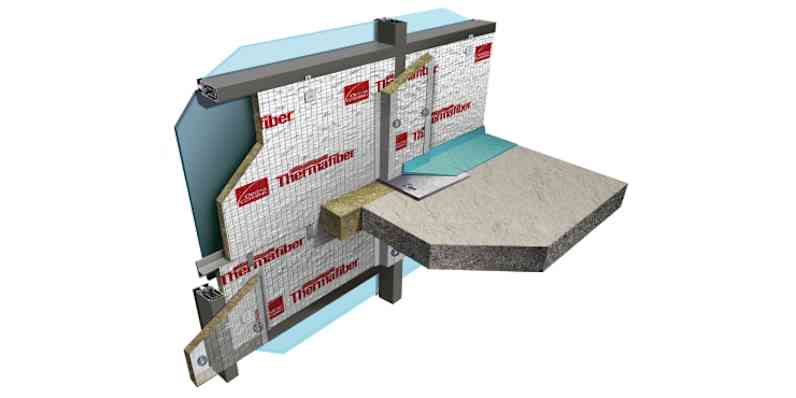
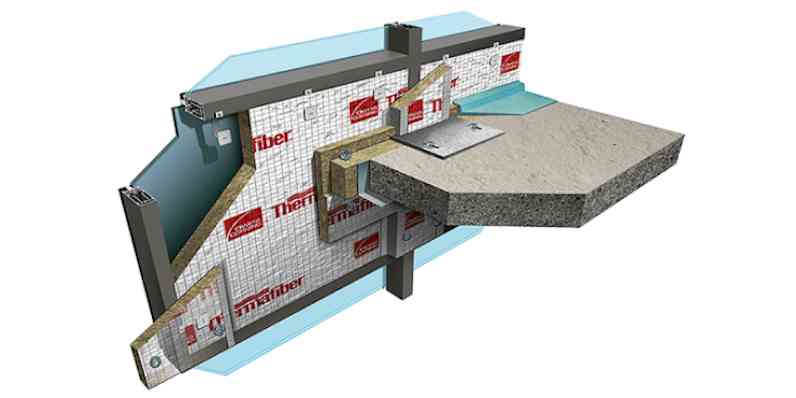
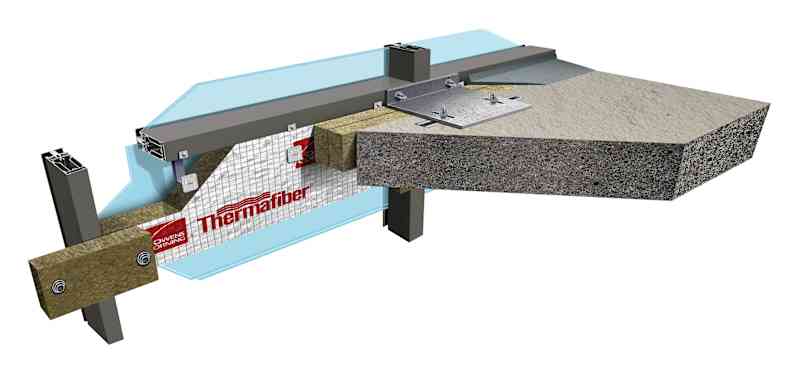
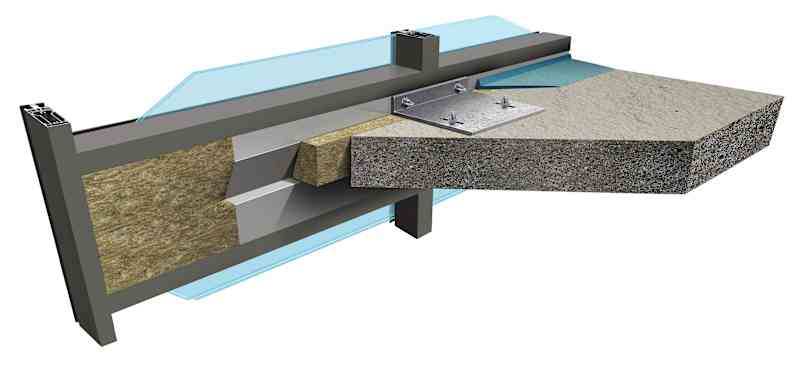
Perimeter fire containment is a system of materials installed where a building’s floor slab, the concrete floor structure, by-passes the exterior curtain wall, a non-load-bearing outer wall often made of aluminum framing or metal. The void between the floor slab and a perimeter fire containment system comprised of fire-resistant mineral wool insulation to help prevent flames, smoke, and heat from spreading between floors. Curtain walls require these fire-stopping systems to help maintain compartmentalization in the event of a fire.

Why Perimeter fire containment systems are critical

One of the most complex and least understood areas where fire can spread is at the perimeter of a building, making perimeter fire containment systems critical. A properly designed and installed   perimeter fire containment system helps protect buildings, intellectual property, and business capital, while also allowing people inside the structure more time to escape in the event of a fire.

Why Is Passive Fire Protection Important?

Passive fire protection is a building safety strategy that uses fire-resistant materials and construction methods to help slow the spread of flames, smoke, and heat during a building fire. It plays a critical role in a building’s overall fire safety strategy and is a key part of effective fire-stopping systems. Buildings should contain a layered set of fire protection systems that work together, known as the balanced approach to life safety, which includes the following there elements:

  1. Detection - includes alarm systems, such as smoke and heat detectors in the building
  2. Suppression - encompasses active systems like the installation of automatic sprinklers
  3. Compartmentation - contains the fire to the room of origin, allowing occupants time to evacuate the building and allowing fire personnel time to enter the building to extinguish the fire.

What is the difference between active & passive fire protection?

Passive systems (like perimeter containment) are built into the structure to resist fire spread without human or mechanical action. Passive systems do not require activation for operation, when installed properly. Active systems, such as sprinklers, must be triggered with some type of activation to switch the system to an “on” position. Although active systems are essential to firestopping and life safety during a catastrophic event such as fire, all three detective, active, and passive systems should be incorporated into the building's fire safety design.


what is Thermafiber Insolutions® and why do they matter?

Thermafiber Insolutions® delivers tested performance for perimeter fire containment, helping to meet fire codes, providing fire barriers solutions that contribute to property protection, and supporting overall system resilience. Trust our experienced team of insulation consultants to provide guidance on perimeter fire containment system integration, helping incorporate essential passive fire containment systems into buildings that can be designed into the exterior wall without jeopardizing the building aesthetics. 

Enclosure SolutionsSpecifying for Life Safety

Owens Corning® Thermafiber® is committed to providing solutions that help the commercial building professional confidently design, specify, and install durable systems for commercial structures. Access all necessary documents, guide specifications, CAD files, and detailed product data sheets with a single click.

Technical Consulting Team

Thermafiber Insolutions®

The Thermafiber Insolutions® insulation consultants provide comprehensive, all-phase consultation and technical expertise. Technical services include engineering judgments, accurate and detailed CAD drawings, and a knowledge base of building codes  focused on perimeter fire containment solutions without sacrificing design.

Request an engineering judgement or contact us today.

Person using a lap top to view the Perimeter fire containment system selector

Decades of leadership in curtain wall fire containment systems

Perimeter Fire Containment System Selector

Thermafiber pioneered the testing of curtain wall fire containment in 1971 and continues to raise the bar with new tests each year. Our newest innovation, the Impasse® curtain wall insulation system, overlaps components during installation to lock in the fire barrier, virtually eliminating the possibility of insulation materials becoming dislodged by fire’s turbulent forces.

Enhanced Learning

Perimeter Joint and Curtain Wall Assemblies

A critical topic of interest today in the AEC community is the understanding of proper curtain wall design techniques using high-performance system solutions to provide fire safety in multi-story curtain wall applications.  

Paths of Fire Propagation

There are two paths of fire propagation:

  1. Fire can spread through the interior joint between the rated floor assembly and unrated curtain wall. 
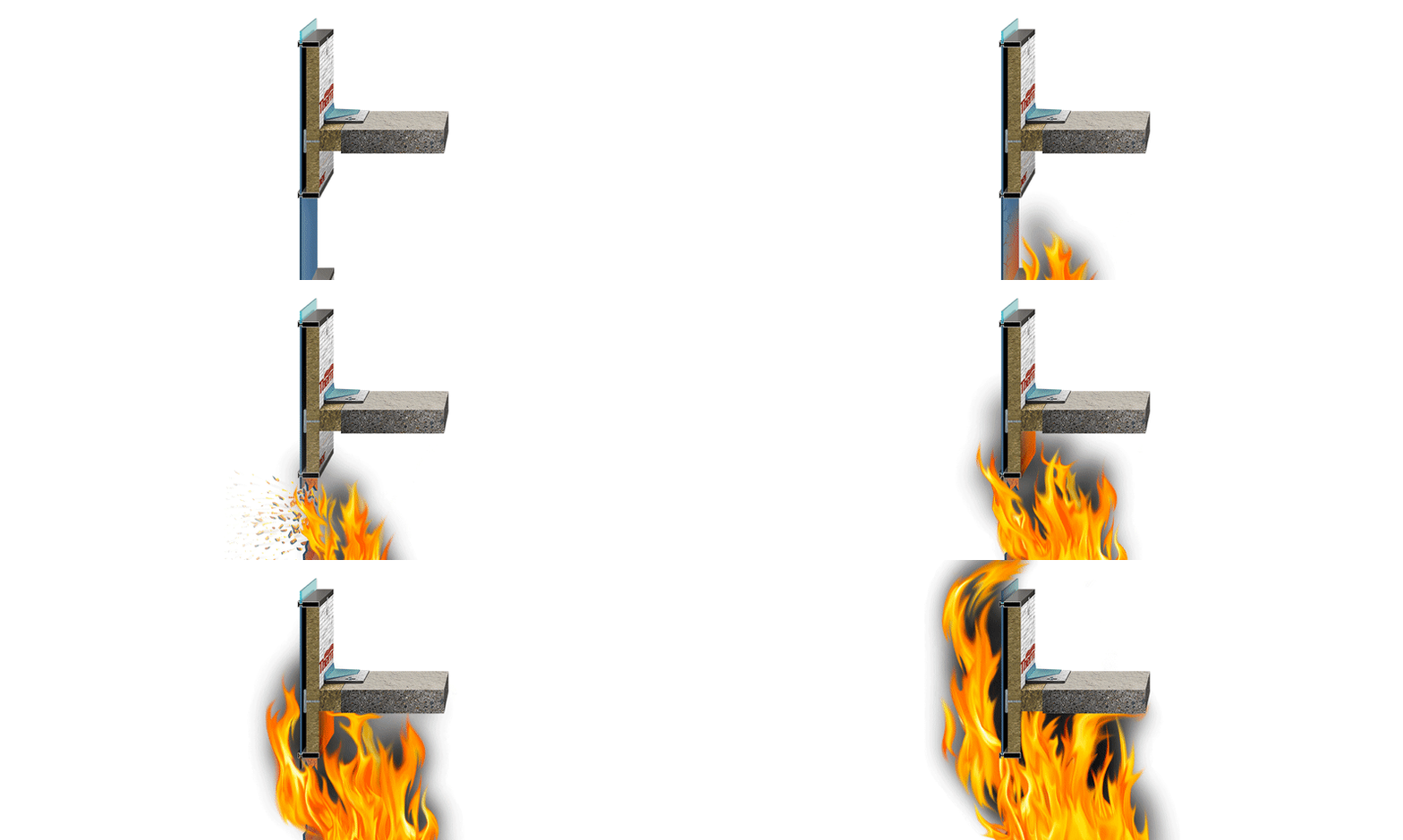
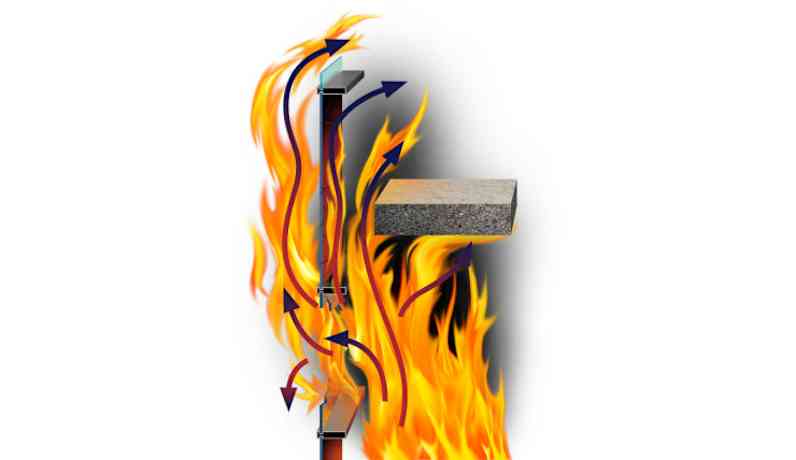
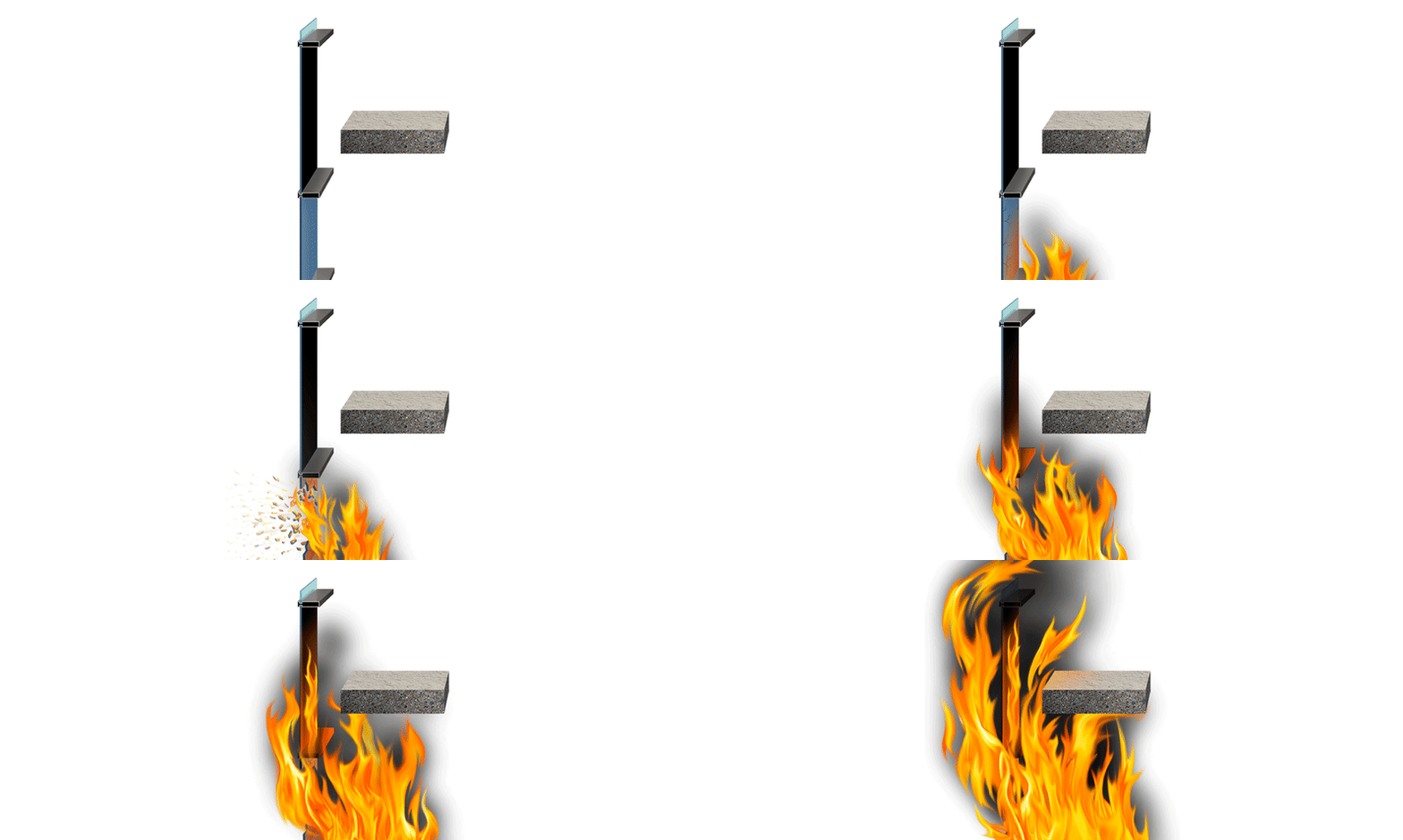
  2. Fire can also propagate via the exterior of the building, an effect known as “leap frog,” in conditions where there is zero, or very short, spandrel protection. Leap frog fire spread occurs when the fire breaks out the vision glass on the floor where the fire originated, allowing flame and hot gases to escape to the outside of the building. The fire then breaks out the vision glass on the floor above and enters into the interior space, engaging combustibles and continuing to cause fire spread vertically, via the exterior of the building. Fire can also spread via the interior cavity of an unprotected or improperly protected spandrel area.

Unprotected Perimeter Joint

This illustration shows how fire can spread vertically when a curtain wall is left unprotected.

Animation of fire propagating through an unprotected perimeter joint.

Protected Exterior Wall and Perimeter Joint

Here, both the curtain wall spandrel and interior joint are protected by a mineral wool perimeter fire containment system, preventing the spread of fire.

Animation of fire not propagating through a perimeter joint as it is protected.

Why Choose Mineral Wool Insulation Products for Perimeter Fire Containment?

Mineral wool insulation products, such as Thermafiber® FireSpan® and Thermafiber® Safing, play a vital role in perimeter fire containment systems due to their physical fire resistive characteristics and proven performance in PFC systems, fire resistance, and tested system.

  • High-temperature performance: Certified E2307 mineral wool is the only fire-resistive insulation material that has been tested and proven to protect spandrel wall components for up to 3 hours of fire exposure to the test method ASTM E2307. 
  • Reliable Joint Barrier: Certified E2307 mineral wool compressed into joints to help resist fire, smoke, and gas movement between floors
  • Structural integrity during fire test: This fire-resistant Certified E2307 mineral wool insulation board helps maintain the integrity of the curtain wall systems and protects framing elements, such as vertical mullions from erosion during a fire event.
  • Tested assemblies: Certified E2307 mineral wool products are included in UL® and Intertek® perimeter fire containment systems compliant with ASTM E2307.


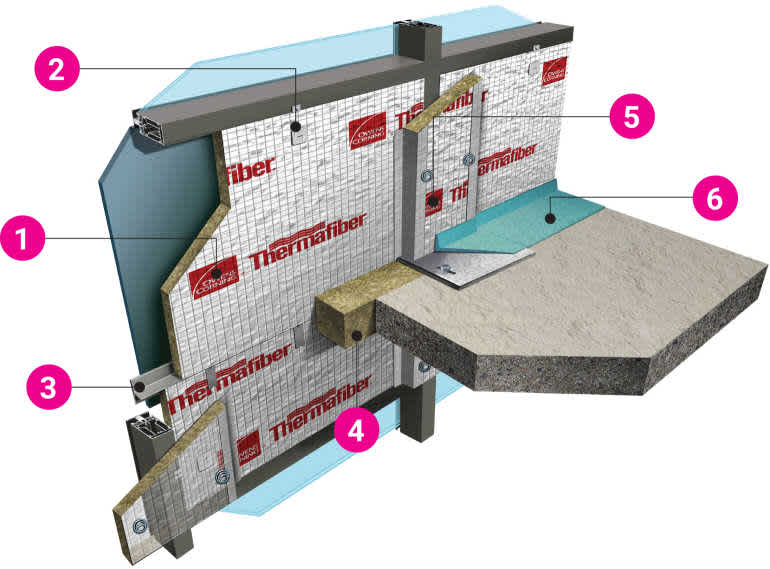
SIX CRITICAL COMPONENTS OF A TESTED AND LISTED PERIMETER FIRE CONTAINMENT SYSTEM

For a perimeter fire containment assembly to work properly and meet building code requirements, certain critical design elements must be included: 

A fire containment system featuring six critical components

1. Thermafiber® FireSpan® mineral wool insulation at the specified thickness

  • ASTM E2307 mineral wool insulation is mechanically attached within the spandrel opening.
  • ASTM E2307 certified mineral wool is the only fire-rated insulation material that has been tested and proven to protect spandrel wall components (up to 3 hours when tested to ASTM E2307).
  • Mineral wool insulation must be tested and certified in UL® or Intertek® designs per ASTM E2307.

2. Mechanical attachment of insulation to the spandrel with Thermafiber® Impasse® Hanger

  • During a fire, there is a lot of turbulence, movement, and gravitational pull.
  • Without mechanical fasteners, the insulation will become dislodged, allowing fire to propagate to the next floor.
  • See specific UL® or Intertek® listings for specific FireSpan® products to be used as well as fasteners and spacings.

3. Backer/reinforcement member

  • A backer bar reinforcement member, which can be a lightweight steel angle, T-bar or hat channel, is placed behind the curtain wall insulation in line with the floor slab. See UL® or Intertek® listings for details.
  • Most support members. are required to be a minimum of 20 ga. galvanized steel (unless the listing calls for a specific gauge).
  • The backer/reinforcement member keeps the curtain wall insulation from bowing due to the compression-fit of the safing insulation.
  • Reference the tested and listed system for specifics on providing the proper reinforcement at the safing line.

4. Compression-fit Thermafiber® Safing mineral wool insulation

  • This E2307 certified insulation forms a tight seal in the interior void—the area that is required by code to be sealed so that flame and hot gases cannot pass through the joint.
  • It is essential to install Thermafiber® Safing insulation at the proper depth, compression, and alignment to form a tight seal.
  • Tested and listed assemblies provide information on the amount of compression and in which direction the Thermafiber® Safing insulation is to be installed. 


5. Thermafiber® FireSpan® 90 Mullion Covers to protect exposed vertical mullions

  • Aluminum will melt at 1,220°F, or as early as 9 minutes into a fire.
  • If left exposed, the aluminum framework will melt and cause an early failure in the system.
  • Protect vertical mullions with Thermafiber® FireSpan® 90 Mullion Cover insulation.
  • Thermafiber® FireSpan® 90 Mullion Cover Insulation is attached with either Thermafiber® Spiral Anchors every 12" o.c. or with patented Thermafiber® Mullion Cover Brackets.

6. Smoke barrier

  • Smoke inhalation is responsible for the majority of fire-related deaths.
  • To impede the passage of smoke, apply an approved smoke barrier over the top of the safing mineral wool insulation.
  • See specific UL® or Intertek® listings for approved smoke sealants.

System Options

Specifying for Life Safety

From its inception, Owens Corning® Thermafiber® has been dedicated to improving life safety and fire protection by manufacturing mineral wool insulation for commercial, residential and industrial applications. Owens Corning® Thermafiber® has identified trends in perimeter exterior wall designs and has developed and tested fire containment solutions for those popular designs. These perimeter fire containment solutions are engineered to be code-compliant without compromising design.  


Tested and Listed Perimeter Fire Containment Systems

CW-D-1014 Through 1017

Thermafiber® Impasse® No Backer Bar™ Aluminum-Framed Curtain Wall Perimeter Fire Containment System


Explore Solution
Thermafiber® Impasse® No Backer Bar™ Aluminum-Framed Curtain Wall Perimeter Fire Containment System

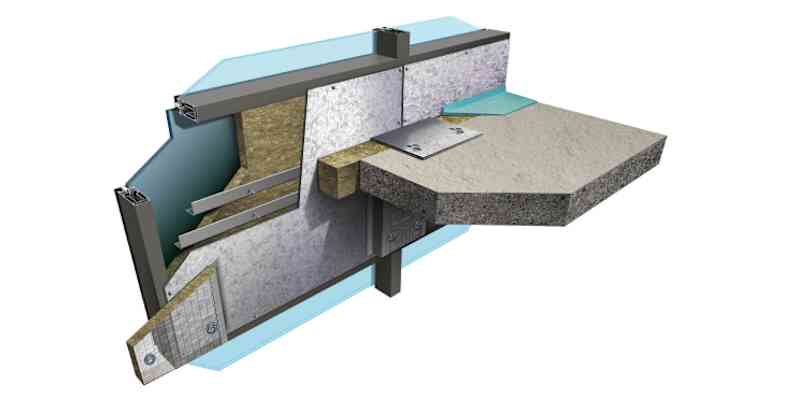
CW-D-1037

Thermafiber® Aluminum-Framed Curtain Wall Perimeter Fire Containment System with Galvanized Steel Back Pan


Explore Solution
Thermafiber® Aluminum-Framed Curtain Wall Perimeter Fire Containment System with Galvanized Steel Back Pan

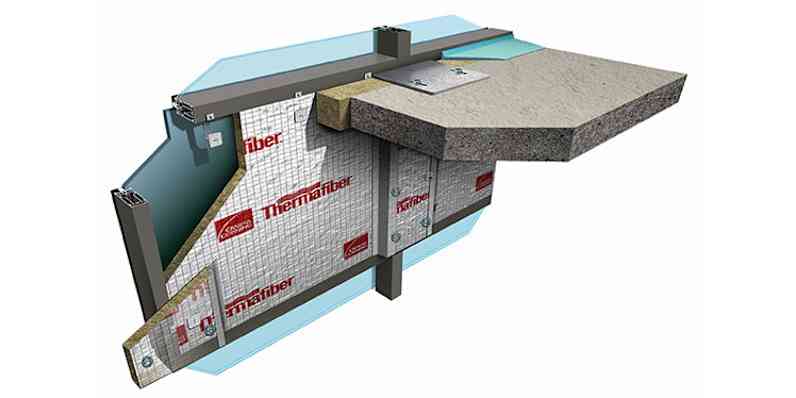
CW-D-2039

Thermafiber® Impasse® Aluminum-Framed Curtain Wall Perimeter Fire Containment System


Explore Solution
Thermafiber® Impasse® Aluminum-Framed Curtain Wall Perimeter Fire Containment System

CW-D-1012 Through 1013

Thermafiber® Impasse® No Backer Bar™ with FireLedge® Aluminum-Framed Curtain Wall Perimeter Fire Containment System

Explore Solution
Thermafiber® Impasse® No Backer Bar™ with FireLedge® Aluminum-Framed Curtain Wall Perimeter Fire Containment System

CW-S-1016

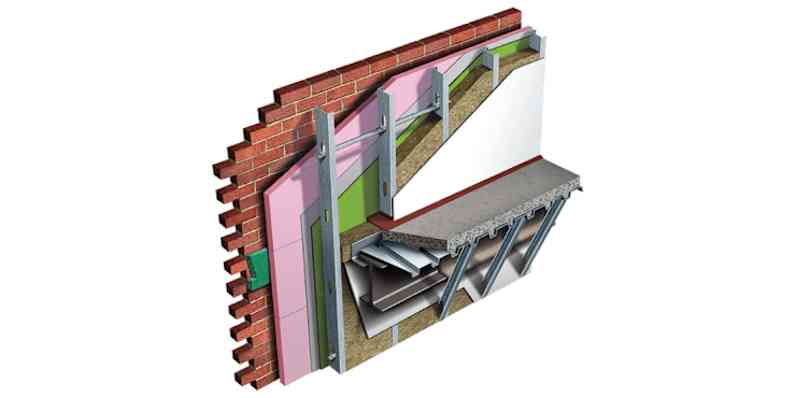
Thermafiber® Steel-Framed Curtain Wall Perimeter Fire Containment System


Explore Solution
Thermafiber® Steel-Framed Curtain Wall Perimeter Fire Containment System

Thermafiber® Impasse® Zero Spandrel

The Thermafiber® Impasse® Zero Spandrel PFC System will serve any short spandrel design with an F-rating of up to 3-hours.


Explore Solution

Thermafiber® Crimped Backpan

Thermafiber® Crimped Backpan System simplifies installation and inspection by using a crimped backpan, eliminating extra reinforcement.


Explore Solution
Thermafiber® Crimped Backpan

Safety Act Certified

Pioneers in PFC Deliver Recognized Safety

Owens Corning® Thermafiber® was the first insulation manufacturer to be publicly listed with The U.S. Department of Homeland Security (DHS) as having products that have SAFETY Act Designation. Read our brochure or consult our SAFETY Act FAQ to learn more and find out why 4 of the 5 tallest buildings in the western hemisphere trust Owens Corning® Thermafiber®


Designated Safety Act from US Department of Homeland Security certificate

Project Spotlight

Trusted to Protect Iconic Buildings

Owens Corning® Thermafiber® Perimeter Fire Containment Systems can be found in some of the most advanced buildings being constructed today. Here are just a few projects that showcase the safety and durability of our Perimeter Fire Containment Systems.

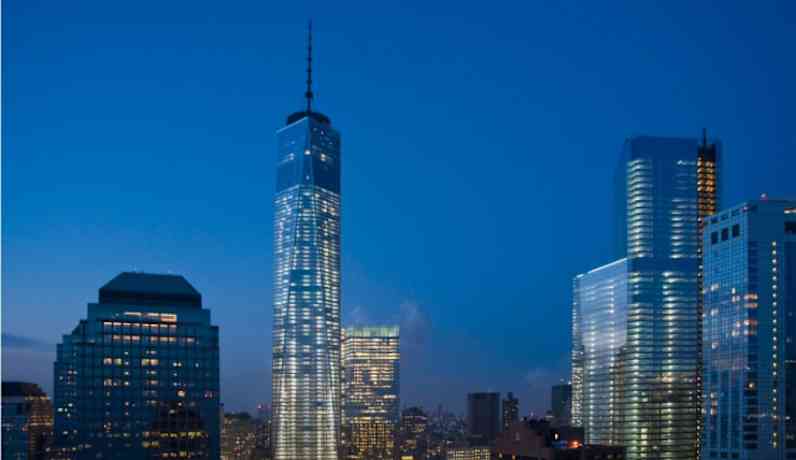
One World Trade Center - New York City, NY

Project Details
One world trade center image looking at sky with clouds

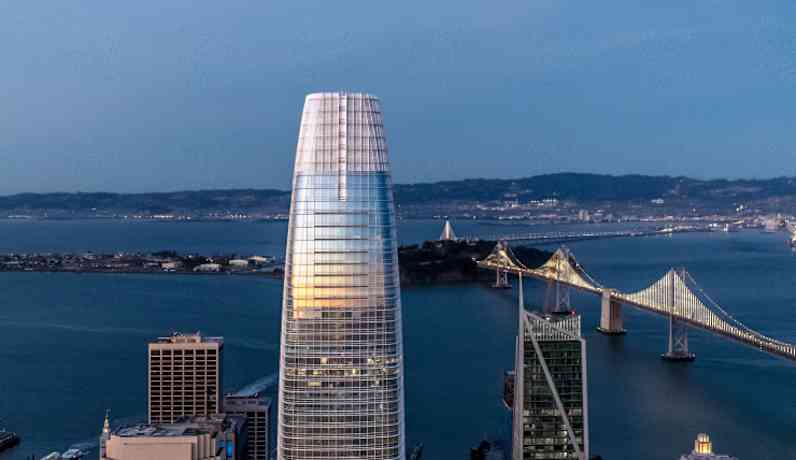
Salesforce Tower - San Francisco, CA

Project Details
Salesforce tower featuring the of top of building overlooking water

181 Fremont - San Francisco, CA

Project Details
181 Fremont skyscraper overlooking city and water

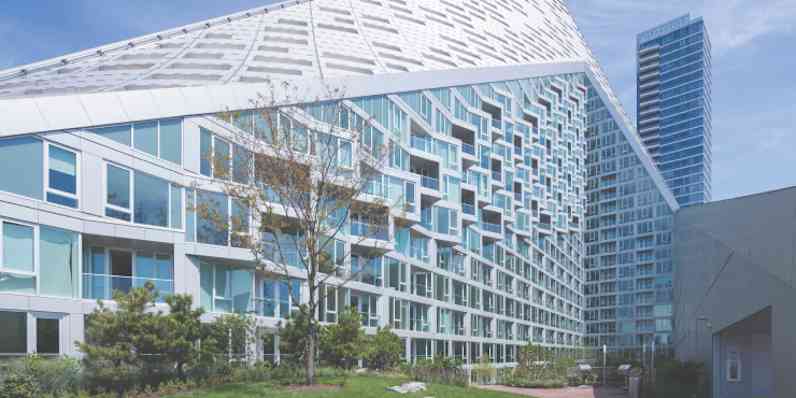
VIA 57 West - New York City, NY

Project Details
Modern commercial building featuring white windows and slanted roof

Industry News

Building Enclosure Magazine
Smart Takes on Life Safety

Listen in as we talk about smart, high-performing enclosures in commercial buildings and focus on codes that spotlight the need for passive life safety systems.

Listen Now
Talking Life Safety podcast featuring headset as logo

Building Enclosure Magazine
Owens Corning Spotlights Strategies to Support Life Safety

Read about the three steps that specifiers can take to support life safety in commercial buildings.

Read More
City featuring skyscrapers and safety equipment to use on skyscrapers while working

Life Safety Digest, page 26
Science and Testing Inform the Engineering Judgment

In a commercial design environment, what role do engineering judgments play in supporting life safety? Angie Ogino, technical leader at Owens Corning Thermafiber, and vice president of the International Fire Stop Council discusses this question and more.

Read More
Professional preparing an engineering judgement

Architectural Products
Incorporating Perimeter Fire Containment into Sustainable Buildings

Learn about why high-profile buildings coast to coast trust mineral wool for perimeter fire protection.

Read More
skyscraper overlooking water featuring bridge

Building Enclosure
A New Testing Method Assesses Leap-Frog Risk

Building codes continue to evolve to address life safety issues such as vertical fire spread. Learn about a new testing method—ASTM E2874-19 for assessing risk of fire spread vertically from floor to floor.

Read More
commercial building closeups during late evening

Walls & Ceilings Magazine
Assessing Leap-Frog Risk: A New Testing Method

Two ongoing concerns when it comes to vertical fire spread are the “leap-frog” effect and the increased use of combustible cladding materials. To address these, a new testing method—ASTM E2874-19 assesses risk of fire spread vertically from floor to floor. 

Read More
fire spreading vertically from floor to floor

Find Our Products