











Your roof ventilation probably isn’t something you think about very often, but it plays an important role in many aspects of day-to-day life in your home. Having the right amount of ventilation in your attic can have a positive effect on the lifespan of your roof system, the comfort and well-being of your family, your future costs for home repairs and how much you pay for heating and cooling.
How Attic Ventilation Works
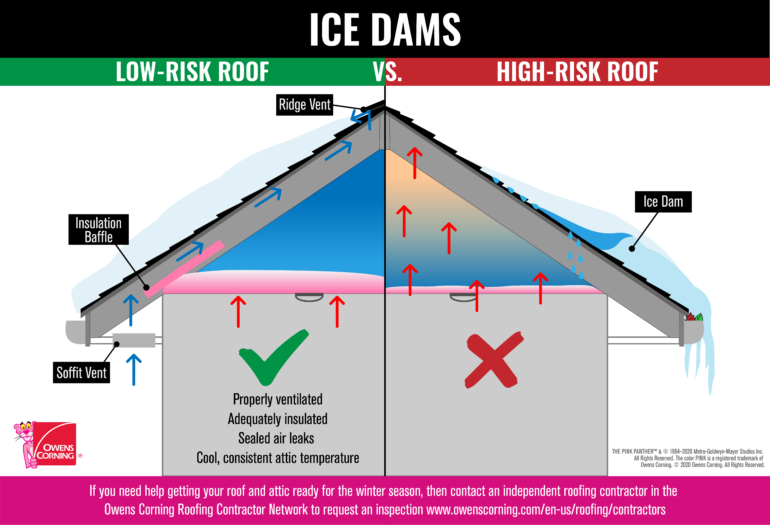
Effective ventilation in an unfinished attic usually includes intake vents down low along the soffits, and exhaust vents up high at the peak or roof ridge. This allows for a continuous flow of air through the space. Cooler outdoor air gets drawn in through the soffit vents, and warm, humid air that migrates to the highest point exits through the vents along the roof ridge.
Why Adequate Roof Ventilation is Important
Proper ventilation in your attic helps address excess heat and moisture that can otherwise wreak havoc on your home. Heat and moisture buildup in an attic cause predictable but different problems in hot and cold climates; areas with hot summers and cold winters can suffer the effects of both.
When it’s hot outside, the sun beating down on the roof can increase the temperature in the attic.
Exposure to this excessive heat can warp the roof sheathing and distort and prematurely age the shingles. If the attic floor isn’t evenly and adequately insulated, that heat can radiate down into the finished living areas and make it more difficult and costly to keep the living space comfortable.
In locales where the temperature drops below freezing during the winter, warm air escaping into the attic from the heated living space below rises to the underside of the roof deck.
As the roof deck warms, the bottom layer of accumulated snow on the rooftop begins to melt, causing water to trickle down the roof. Once the runoff reaches the cold outer edge, it refreezes into ice. When this happens repeatedly, an ice dam forms along the eaves, blocking the escape of further runoff. Once the water has nowhere to go, it can back up under the shingles.