This is a cache of https://www.owenscorning.com/en-us/insulation/applications/sewage-lines. It is a snapshot of the page as it appeared on 2026-01-31T12:24:50.895+0000.
Sewage Lines | Owens Corning Insulation
Skip to main content

Thermal insulation solutions for sewage lines

Sewage lines are used to transport waste water from inside buildings to the sewage network. These lines can carry cold as well as hot water and usually operate at temperatures around ranging from +5°C to 50°C (41°F and 122°F).

Sewage piping systems are demanding for condensation control, and in high humidity environments, the vapor drive can be relentless.

Poor insulation material selection, incorrect installation or damage to the vapor retarding foils can leave the insulation system vulnerable to failure and result in costly problems associated with moisture.
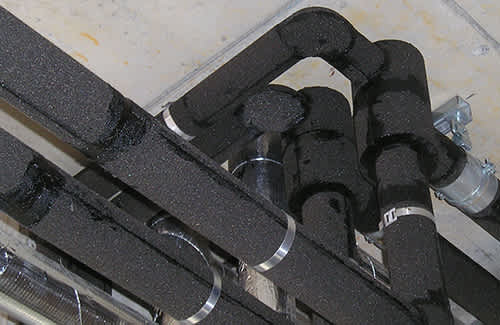
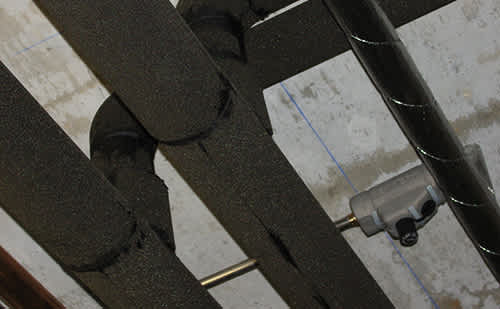
Image of HVAC piping

Being subject to moisture is one of the reasons why the insulation used should be a closed-cell material. This helps prevent ingress of water or condensation into the insulation which could result in corrosion or the formation of mold. Additionally, being often installed inside important and public buildings, the insulation should be also be non-combustible and should not give off toxic gases or fumes in case of fire.

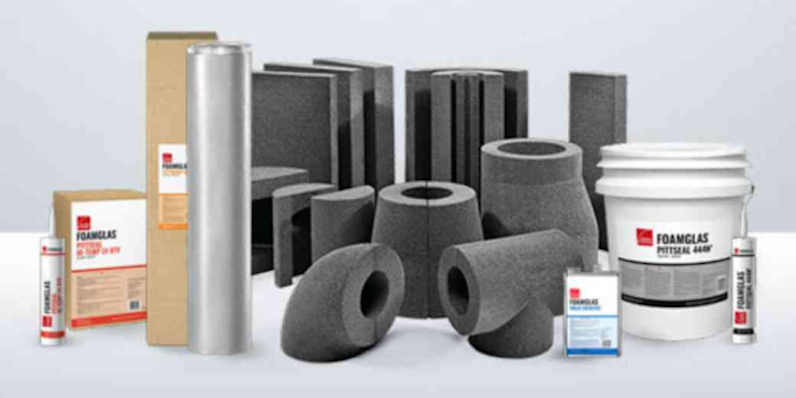
FOAMGLAS® insulation answers these requirements. Its constant insulation efficiency is designed to prevent possible dripping due to surface condensation and therefore help limit corrosion on the pipes.

Image of SML piping

Typical Configuration for Service Temperatures between 5°C and + 50°C (41°F and 122°F)

  • A single layer system of FOAMGLAS® insulation is generally sufficient for this temperature range.
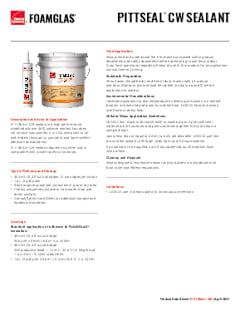
  • Joints shall be sealed with a PITTSEAL® sealant appropriate for the application.
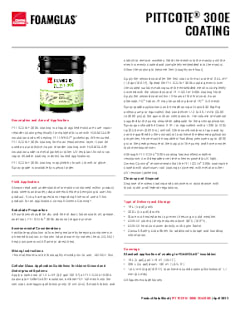
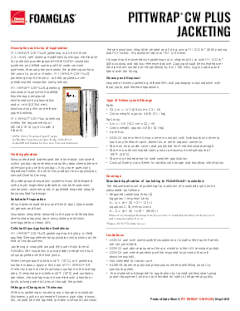
  • Coating, jacketing or cladding shall be applied for aesthetics or where mechanical protection is required.