



This is a cache of https://www.owenscorning.com/en-ca/technical-resource-library/myth-busting. It is a snapshot of the page as it appeared on 2026-03-19T07:13:56.582+0000.
Debunking Common Myths | Owens Corning The Building Library
Skip to main content

Debunking Common Myths

Fiberglass and Mineral Wool Batt Insulation

THE CHALLENGE

Industry professionals face what may feel like an infinite number of decisions in their day-to-day design and construction tasks. One of these decisions is selecting appropriate insulation products. Many insulation products are available on the market to meet a project’s needs, and it can be challenging to determine the best product. Common insulation myths further complicate product selection, impede innovation, and limit product options. 

THE SOLUTION

Through serving customers throughout Canada and conducting third-party market research,¹ Owens Corning has encountered and qualified these myths firsthand.

This resource aims to clarify myths for one of the most common insulation applications: batt insulation in stud-framed exterior walls and roof parapet cavities.

COMMON BATT INSULATION MYTHS¹

Combustibility

26% of architects and 24% of builders believe fiberglass insulation is combustible.

Settling

41% of architects and 25% of builders believe fiberglass insulation is susceptible to settling in the wall cavity.

Moisture Susceptibility

22% of architects and 26% of builders believe fiberglass insulation is susceptible to mould growth and promotes corrosion.

Sustainability

27% of architects and 21% of builders believe fiberglass insulation has a less favourable environmental impact than other insulation products.

Table 1  Composition of insulation terms used in this document.

Insulation Term

Compositon

Mineral fiber insulation

Inorganic fibers spun from glass, rock, or slag

Mineral wool insulation

Spun rock and slag

Stone wool Insulation

Spun rock
Slag wool insulation

Spun slag

Fiberglass insulationSpun glass fibers

Slag

By-product of steel production

Cullet

Crushed post-consumer glass
(e.g., glass bottles, windowpanes, etc.)

Many terms in the industry define insulation products with inorganic fibers. Sometimes these terms are used interchangeably and/or even incorrectly in the industry.

Table 1 clarifies the composition of the insulation terms used in this document.

ABOUT MINERAL FIBER BATT INSULATION

Mineral fiber batt insulation products are made of inorganic fibers spun from glass, rock, or slag. Fiberglass batt insulation is made from spun glass, while mineral wool batt insulation is made from spun rock or slag. The manufacturing process for both insulation products produces a fibrous product commonly used to insulate wood- or steel stud-framed wall cavities. This fibrous product reduces heat and sound transfer in exterior walls and reduces sound transfer between interior spaces. Mineral fiber batt insulation products may also be used in wood- or steel stud-framed parapet wall cavities to minimize heat loss where low-sloped roof and wall assemblies meet (see Figure 1).

Both fiberglass and mineral wool batt insulation offer these benefits:

THERMAL PERFORMANCE

  • Batt insulation products improve a wall assembly’s thermal performance by increasing the R-value of the wall.
  • Both fiberglass and mineral wool batt insulation products are available in a range of thicknesses, widths, and R-values to achieve cavity size fit and assembly-specific thermal performance targets.

ACOUSTIC PERFORMANCE

  • A wall assembly’s acoustic performance can be improved by blocking the sound with additional sheathing layers, breaking the vibration path, and/or providing cavity absorption.
  • Both mineral wool and fiberglass batt insulation can perform sound absorption functions within a framed wall cavity.

RECYCLED CONTENT

  • Recycled materials can be used to manufacture batt insulation products.
  • Fiberglass batts can contain recycled crushed post-consumer glass (e.g., glass bottles, windowpanes, etc.), also known as cullet. Mineral wool batts may also contain post-industrial recycled content.
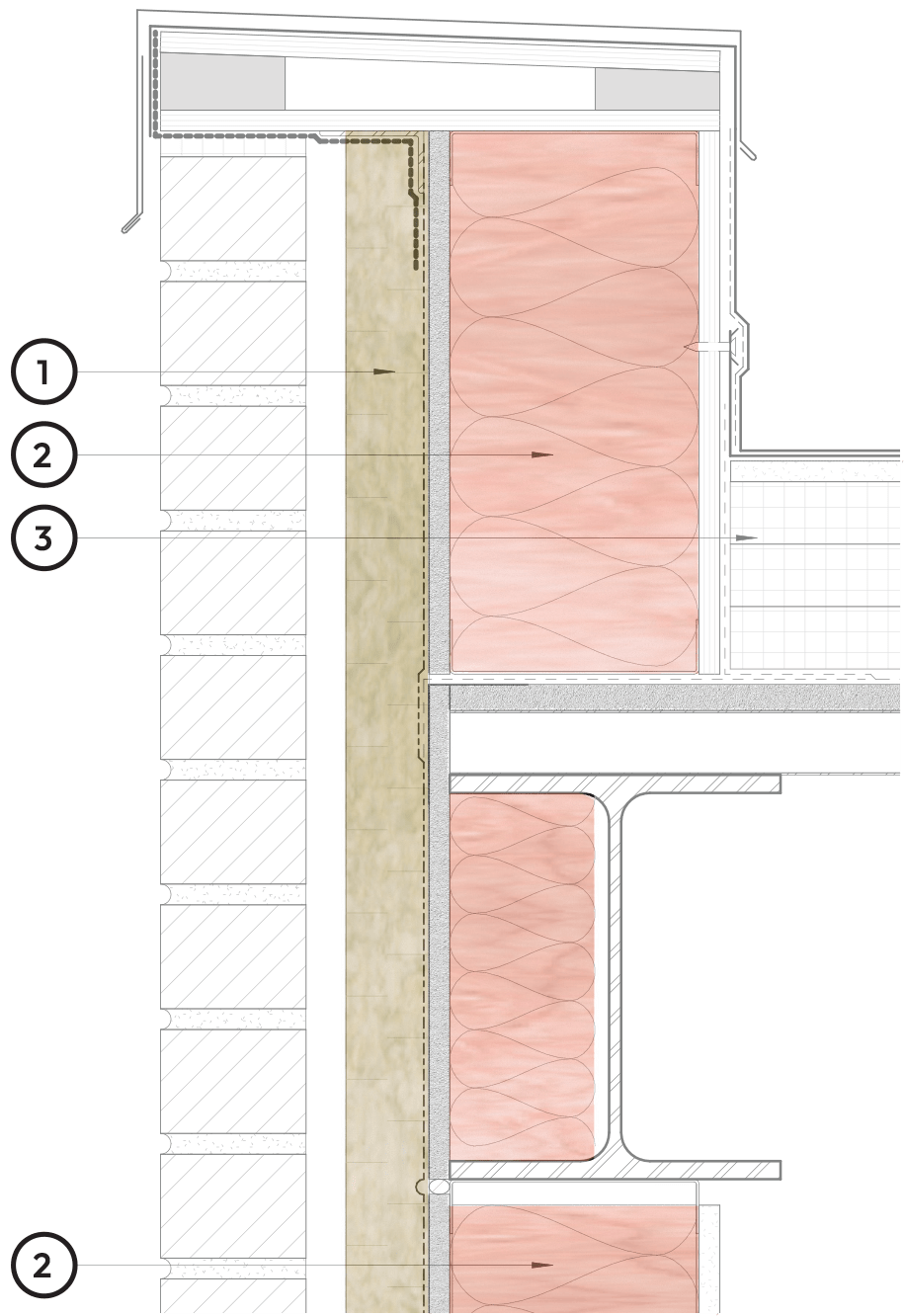
Assembly legend

  1. Continuous exterior insulation
  2. Stud-framed wall cavity with batt insulation
  3. Roof insulation

Figure 1  Steel-stud framed parapet at a roof-to-wall connection.

Myth 1

Fiberglass Batt Insulation is Combustible Whereas
Mineral Wool Batt Insulation is Not

In fact, unfaced fiberglass insulation is classified as a non-combustible material. Neither glass, rock, nor slag burn because they are all minerals and therefore inherently non-combustible.

Both non-combustible and combustible insulation products are commonly used in homes and other buildings. Using a non-combustible insulation product can make it easier to meet building code requirements because the material does not serve as a fuel source during a fire. Little to no flame spread is a property inherent to a non-combustible material. Both unfaced fiberglass batt and mineral wool insulation products offer non-combustible properties.

COMBUSTIBILITY OF COMMON WALL CAVITY INSULATION MATERIALS

Some key combustibility characteristics of common insulation materials used in wall cavity assemblies are summarized below.4

  • The fibers that make up fiberglass and mineral wool batt insulation are inherently non-combustible.
  • Cellulose is not naturally fire-resistant, so fire-retardant additives are mixed in with this insulating material.
  • Polystyrene insulation and most spray foam insulation products are combustible and require a thermal barrier.

CAN/ULC-S114 evaluates the non-combustibility of a material by subjecting it to higher temperatures over a period of time and checking whether mass loss, flame spread, and material temperature rise all meet the standard’s requirements.

CAN/ULC-S102 tests a material's surface burning characteristics, including flame spread and smoke development. Non-combustible insulation materials that achieve the low surface burning metrics per this standard offer a code-compliant option for cavity insulation.

Table 2 illustrates the performance of Owens Corning products when tested to the CAN/ULC-S114 and S102 standards. Refer to each product’s technical data sheet5 for more information.

COMBUSTIBILITY OF WALL ASSEMBLIES

Individual product testing is useful for understanding specific product performance. While insulation may be categorized as non-combustible, it does not confer that characteristic to the entire assembly. The combination of all the assembly components provides the overall FRR per CAN/ULC S101. Therefore, designers cannot rely on a single product to provide the required FRR and must specify rated assemblies.

Specific assemblies are tested to determine the FRR of the assembly, helping designers select suitable systems that meet their project’s fire design requirements. UL Solutions’ database6 includes tested assemblies, their FRR, and requirements for the assembly components and detailing.

KEY TERMS

Non-combustible Material – A material that, in the form in which it is used and under the conditions anticipated, will not ignite, burn, support combustion, or release flammable vapours when subjected to fire or heat.²

Fire Resistance Rating (FRR) – The time that an assembly or material can withstand exposure to a fire, as tested and defined by industry testing standards.3

Table 2  Testing results for Owens Corning batt insulation products: combustibility and surface burning characteristics.*

Property

PINK NEXT GEN® FIBERGLAS® INSULATION

THERMAFIBER® FIRE & SOUND GUARD® PLUS MINERAL WOOL INSULATION

Test Method

Combustibility

Non-combustible

Non-combustible

CAN/ULC-S114

Surface Burning Characteristics

Flame Spread 0
Smoke Developed 0

Flame Spread 0
Smoke Developed 0

CAN/ULC-S102 and S102.2

* Per technical data sheets at the time of publication.

Myth 2

Fiberglass Batt Insulation is Less Resistant to Settling Than Mineral Wool Batt Insulation

In fact, fiberglass batt insulation does not settle or slump when the rightsized product is properly installed within the wall cavity.7

If insulation settles in a framed wall cavity, it can create uninsulated voids. These voids increase heat loss and reduce the effective R-value of a wall assembly. Voids may also contribute to moisture risks, such as condensation. Properly installed batt insulation resists settling and contributes to comfortable and energy-efficient buildings.

Industry professionals may observe insulation that has settled within wall cavities during exploration or demolition activities. In these instances, the batt insulation has likely settled due to improper sizing or installation.

REDUCE THE RISK OF BATT INSULATION SETTLING IN WALL CAVITIES

Consider these tactics to significantly reduce the risk that batt insulation will settle:

  • Select the right product. Settling is not typically a function of batt insulation material. It is a function of specifying and installing a batt product appropriately sized for the project-specific wood- or steel stud-framed cavity depth and spacing. Batt insulation products are designed to be slightly oversized to create a friction fit within the cavity.
  • Follow installation best practices. Cut the insulation into measured lengths that create a snug and supportive fit on all six sides when installed. Cut the insulation to fit snugly around elements within the cavity, such as electrical boxes, blocking, plumbing, etc.

For more information, see the installation instructions5 for Pink Next Gen® Fiberglas® Insulation and Thermafiber® Fire & Sound Guard® Plus.


IN THE LAB: FIBERGLASS BATT INSULATION

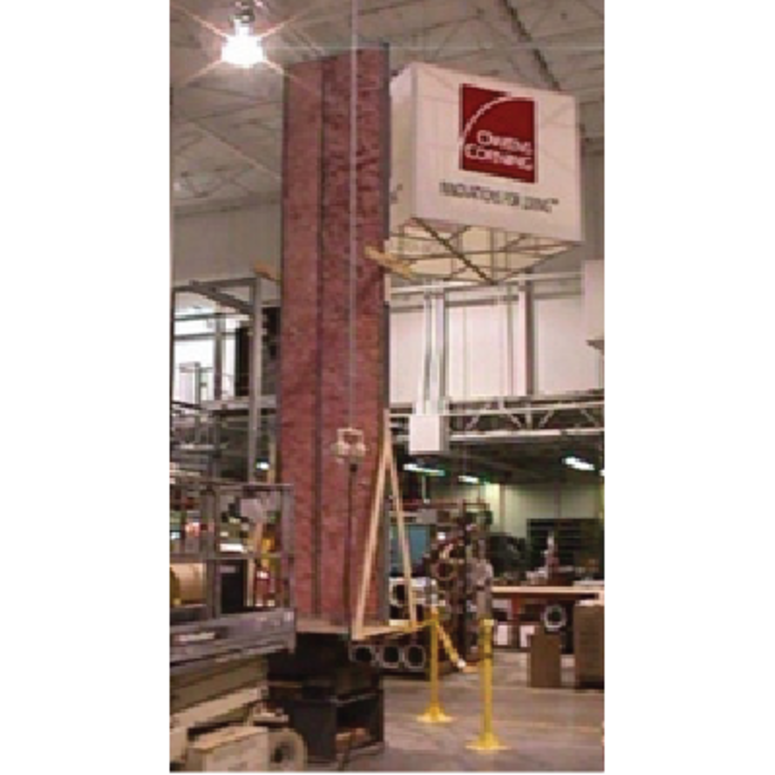
To simulate the likelihood for slump, Owens Corning performed laboratory testing to determine the ability of Owens Corning’s unfaced fiberglass batt insulation to stay in a metal stud wall cavity without slippage or settling when exposed to long-term vibrations.7

Testing was performed on the wall assemblies defined below. One layer of drywall was attached to one side of each assembly. Different support conditions were applied to the other side of the assembly, including drywall, strapping at varying locations, or no support at all. 

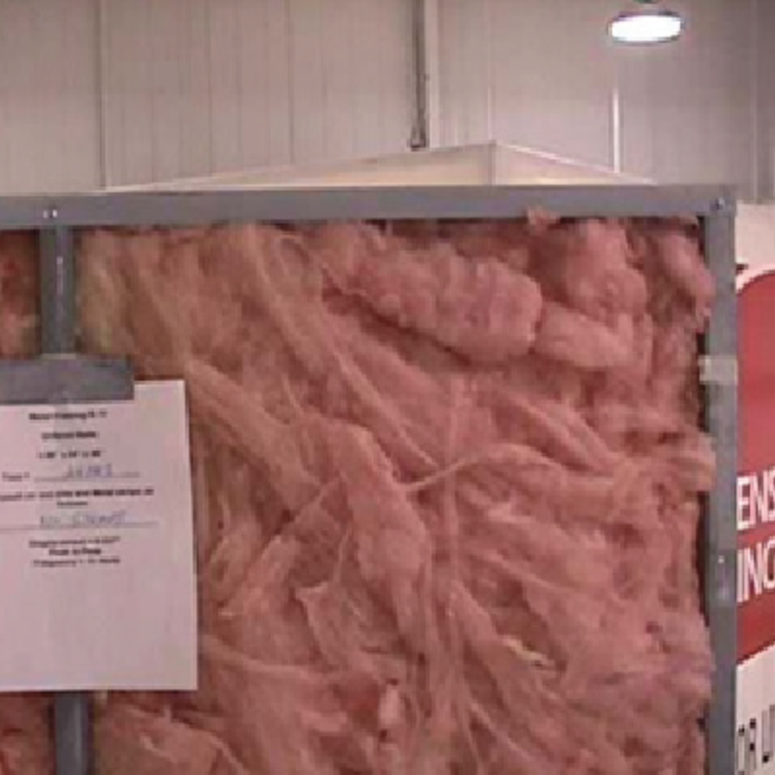
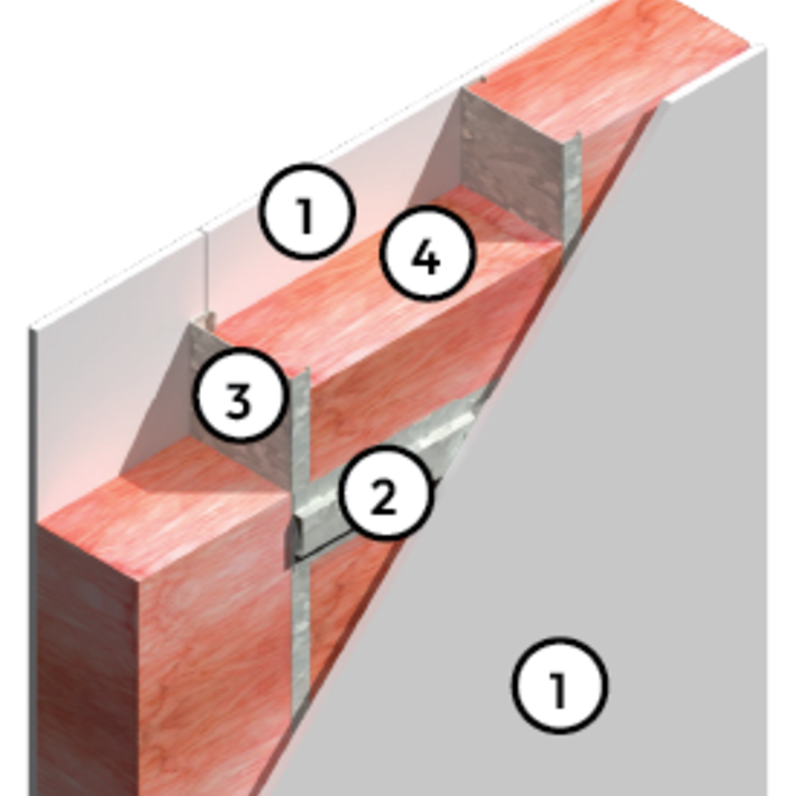
Each test wall specimen and support condition was tested on a vibration table at two different vibration amplitudes for 24 hours each; settling was evaluated visually. All tests on wall specimens that had full continuous support (drywall on both sides) resulted in no recordable slump. Figure 2 and Figure 3 show an example test setup and test results, respectively. Figure 4 shows an example of a wall assembly that appropriately supports the insulation on all sides of the fiberglass batt.

Additional information can be found in the full test report, Performance of Friction Fit Insulation in Metal Wall Cavities Exposed to Long Term Vibrations,7 which is available upon request.

Contact the Owens Corning Canada technical team at www.owenscorning.ca/contacttech to learn more.

Figure 2  Wall assembly test specimen setup.

Figure 3  No recordable settlement of R-11 batt in 16-ft tall wall.

Figure 4a  Example wall assembly.

Assembly legend

1. Single layer of drywall

2. Resilient channels

3. Metal stud framing

4. Fiberglass batt insulation

Test Specimen

R-Value

Cavity Depth

Cavity Widths

Wall assembly 1

R-11

3-5/8"

16 and 24"

Wall assembly 2

R-19

5-5/8"

16 and 24"

Figure 4b  Example wall assembly.

Myth 3

Fiberglass Batt Insulation is More Susceptible to Moisture-Related Problems Than Mineral Wool Batt Insulation

In fact, when used as part of an appropriately designed wall assembly, both fiberglass and mineral wool batt insulation are resistant to moisture-related issues such as fungal growth and corrosion of metal components in the cavity.

Exterior wall cavities, including framed parapet wall cavities, are designed to be dry spaces protected from bulk water intrusion and condensation (including from air leakage). Improperly designed and/or constructed walls can expose wall cavities to liquid water or condensation, creating moisture-related issues. These issues include fungal growth and corrosion, decay, or deterioration of materials, which can result in structural or other performance issues and poor air quality.

MOISTURE PROPERTIES OF BATT INSULATION PRODUCTS

Fiberglass and mineral wool batts are not designed to manage bulk water. Their primary function is to provide thermal resistance (and sometimes acoustic performance) in a dry cavity. Fiberglass and mineral wool batt insulation are highly vapour-permeable and will not contribute to trapped moisture in appropriately designed assemblies.

Fiberglass and mineral wool are made of inorganic materials. Both insulation products pass testing standards for corrosion and fungi resistance (see Table 3).

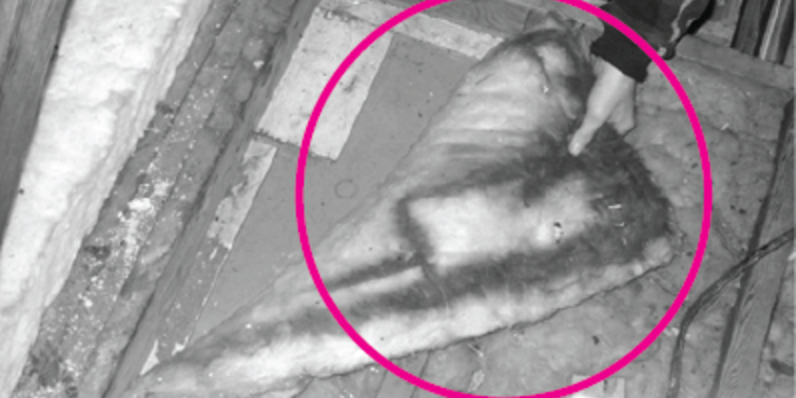
Figure 5, a photo of discoloured batt insulation

Figure 5   Discoloured batt insulation.

DISCOLOURED BATTS

Although fiberglass and mineral wool batt insulation products do not support fungal growth, myths about fungal susceptibility exist. These myths persist because design and building professionals have observed discoloured batt insulation when exploring existing wall or ceiling cavities (see Figure 5). In many cases, this discolouration is not due to fungus. Instead, the discolouration results from dirt and debris buildup on the batt insulation due to air leakage across the framed cavity.

Although fiberglass and mineral wool batt insulation are resistant to moisture-related issues, dirt and debris are not. An airtight wall assembly limits the accumulation of dirt and debris in and on the insulation. It prevents moisture conditions that favour the development of fungi, which can thrive on the food sources found in dirt and debris. Thus, an appropriately designed wall assembly considers the need for airtightness.

Table 3  Testing results for Owens Corning batt insulation products: corrosion and fungi resistance.*

Property

PINK NEXT GEN® FIBERGLAS® INSULATION**

THERMAFIBER® FIRE & SOUND GUARD®
PLUS MINERAL WOOL INSULATION

Test Method

Corrosion of Steel, Aluminum, & Copper

Pass

Non-corrosive

ASTM C665
CAN/ULC-S702

Fungi Resistance

Pass

Complies

ASTM C1338

* Per technical data sheets at the time of publication.
** Terminology describing test results for each product and property is as described in the relevant product data sheets.

MAINTAIN A DRY CAVITY

When specifying a batt insulation product, remember that fiberglass and mineral wool batt insulation products are intended for dry cavities such as framed wall cavities, including parapet walls. Both materials are made of inorganic fibrous materials that are moisture resistant; however, if either is exposed to liquid water or prolonged high humidity, moisture can still accumulate in the spaces between fibers. This accumulation can reduce the thermal properties of the insulation and encourage fungi to grow on dirt or debris. Unfaced batt insulation products are not designed or intended to serve as water, air, or vapour control layers.

Batt insulation may be exposed to water during construction and occupancy. Batts exposed to too much moisture for too long, before or during the construction phase, can cause the batts to deteriorate and can contribute to built-in moisture issues. Proper material storage and construction sequencing can reduce these risks. If cavity insulation is exposed to liquid water during building occupancy, a fundamental failure of the wall or parapet design, or another assembly or system, may have occurred and needs to be addressed.

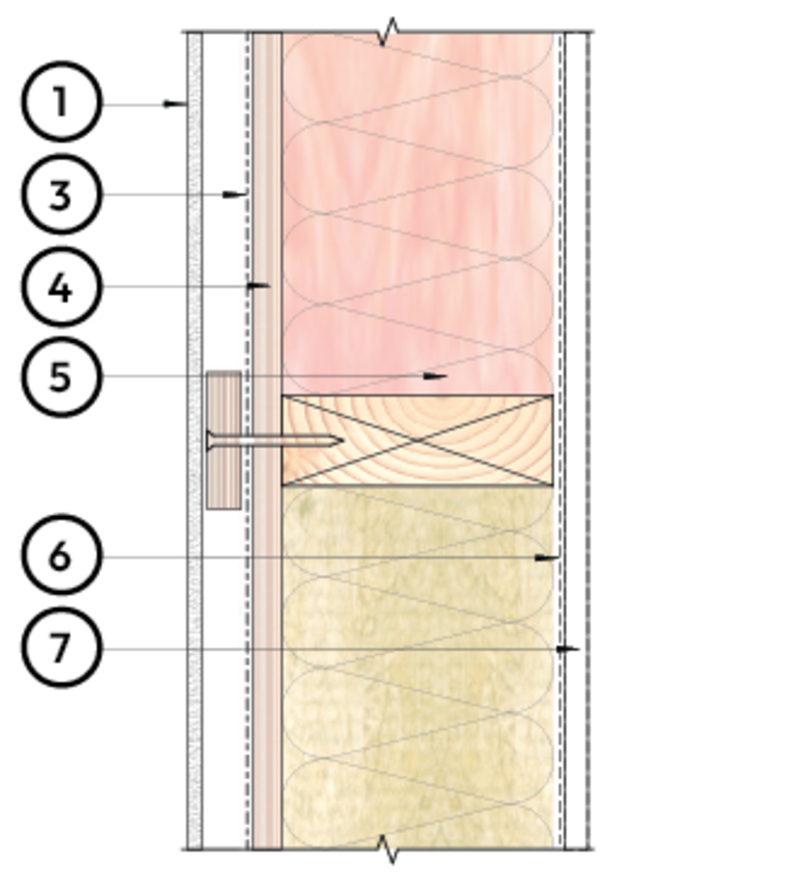
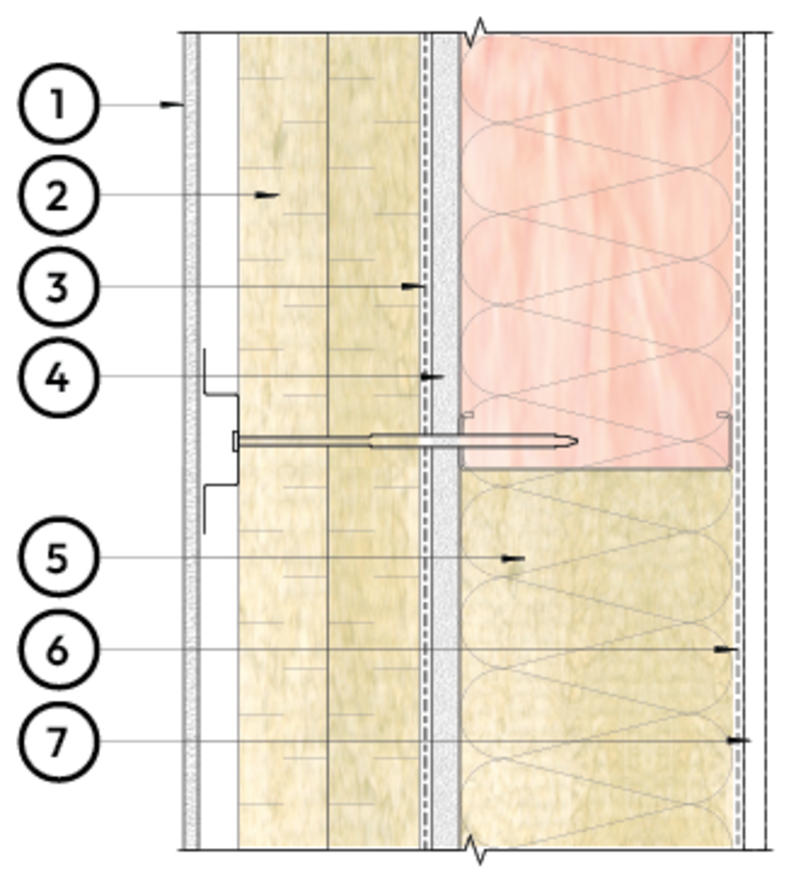
Figure 6 and Figure 7 illustrate two examples of framed wall assemblies that can appropriately manage water, air, heat, and water vapour. These assemblies do the following:

  • Protect the wall sheathing, cavity insulation, and framing from bulk water. This protection is achieved with a water-shedding surface, like cladding, and a water-resistant barrier membrane on the outside of the sheathing.
  • Limit the relative humidity of the wall cavity. An air barrier system and a vapour control layer reduce water vapour within the cavity, while exterior insulation (where used) keeps the wall cavity warmer.
  • Allow the wall assembly to dry. Drying is achieved by limiting the need for vapour-closed assembly layers based on the project-specific climate needs.

Figure 6  Wood stud-framed wall assembly

Figure 7  Steel stud-framed wall assembly.

Assembly legend*

1. Siding (i.e., cladding) (water-shedding surface)

2. Continuous exterior insulation

3. Air barrier and water-resistant barrier membrane (air and water control)

4. Exterior sheathing

5. Stud-framed wall cavity with fiberglass or mineral wool batt insulation (thermal control layer)

6. Interior vapour control layer (requirement and placement vary by climate zone and wall configuration)

7. Interior finish

* Note that the specific wall assembly design will vary by climate zone and specific project needs. The use of vapour control layers and other low-permeance building materials within the wall assembly requires careful consideration by a qualified design professional to limit the risk of moisture accumulation within the wall assembly.

Myth 4

Fiberglass Batt Insulation has a Less Favourable Environmental Impact Than Mineral Wool Batt Insulation

In fact, fiberglass and mineral wool batt insulation both have similar carbon payback periods as other insulation material options.

The concept of “sustainability” can have different meanings to different professionals. A practice becoming more common to support project sustainability decision-making needs is reviewing Environmental Product Declarations (EPDs) to compare the potential environmental impacts of two products. EPDs report on several environmental indicators, including embodied carbon (EC). EC is typically reported as equivalent to greenhouse gas (GHG) emissions, and many insulation manufacturers are working to reduce the EC of their products.

Because the main purpose of insulation is to reduce energy use during building operation, the EC of insulation is an investment in a building’s energy efficiency that is paid back over time. Fiberglass and mineral wool batt insulation products can mitigate greater GHG emissions throughout a building’s operational lifetime than are generated during their manufacturing process, thereby supporting sustainable building practices.

HOW RECYCLED MATERIALS REDUCE ENVIRONMENTAL IMPACTS

The recycled content (RC) of materials used to manufacture batt insulation products also affects a product’s EC. Batt insulation products with higher RC can result in a lower EC because slag and cullet typically reduce emissions during the A1–A3 product stages. See Table 4 for more information about how RC is used in Owens Corning products.

Owens Corning product EPDs can be found
on the Product Transparency page.10

KEY TERMS

Carbon Payback Period – The time it takes during a building’s occupancy phase for the energy savings from using a specific material or product to exceed, or “pay back,” the embodied carbon of that material or product.8

Embodied Carbon (EC) – The greenhouse gases emitted in the process of extracting, manufacturing, and transporting building components. It may also consider the construction of the building itself.9

Greenhouse Gas (GHG) – Gaseous constituents of the atmosphere, both natural and anthropogenic, that absorb and emit radiation at specific wavelengths within the spectrum of radiation emitted by the earth’s surface, by the atmosphere itself, and by clouds. This property causes the greenhouse effect.9

Table 3  Testing results for Owens Corning batt insulation products: corrosion and fungi resistance.*

Property

PINK NEXT GEN® FIBERGLAS® INSULATION

THERMAFIBER® FIRE & SOUND GUARD® PLUS MINERAL WOOL INSULATION

Recycled Content

55% to 63% RC when cullet is available70% post-industrial RC, specifically slag

RC Verification

SCS Global ServicesICC-ES
Benefits

The use of cullet decreases community landfill waste and reduces energy use during manufacturing

The use of slag reduces energy use during
* As determined by the Owens Corning product EPDs at the time of publication. Recycled content statistics are specific to Owens Corning products. Visit the Product Transparency page to learn more.10

THE LINK BETWEEN EMBODIED CARBON AND CARBON PAYBACK PERIOD

The carbon payback period is the time it takes to pay back the total EC of a building’s insulation. The total EC of a building’s insulation is determined by the insulation’s EPD data and the quantity of insulation used. The length of the carbon payback period depends on climate zone, heating/cooling system type, and energy source. It is reached when the operational carbon attributed to energy savings during building use equals the total EC of the insulation. Carbon payback periods for insulation have a wide range. Warmer climates, more efficient heating/cooling systems, and cleaner fuel sources tend to lead to longer payback periods.

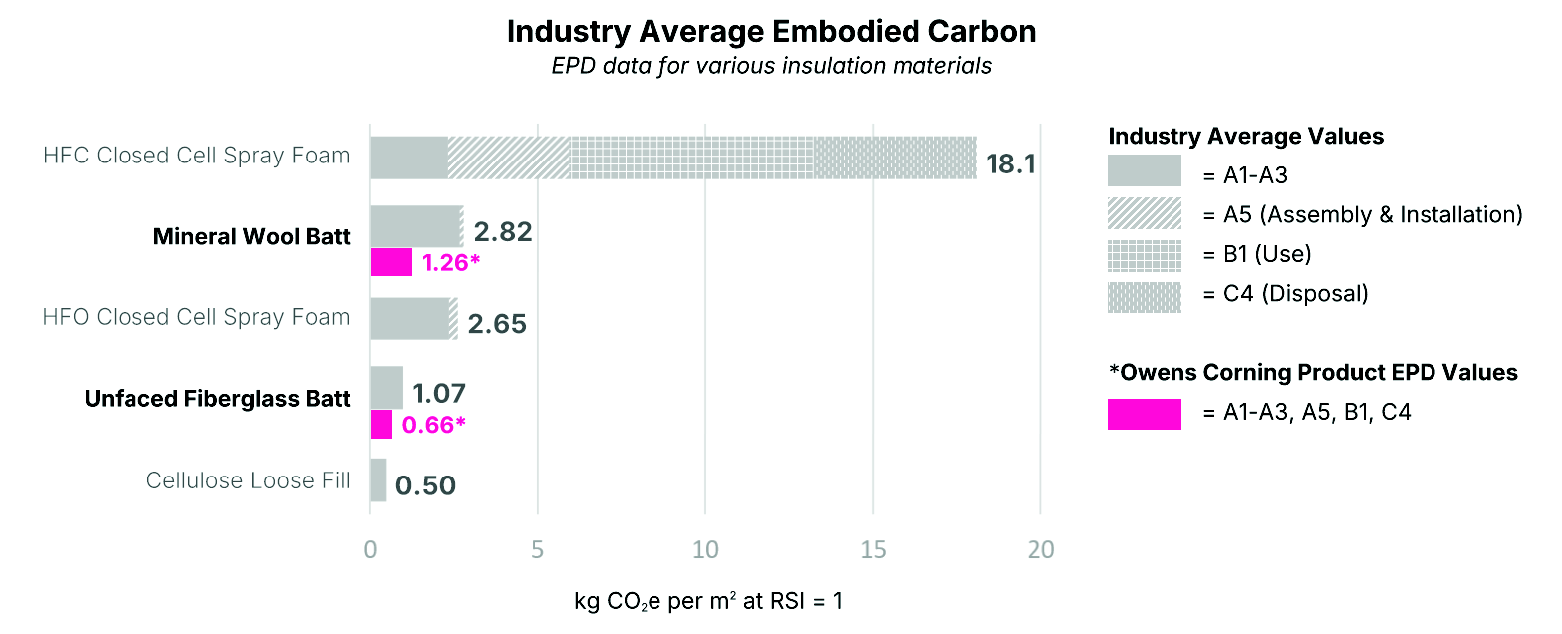
Generally, an insulation product’s EC can be correlated to the payback period length. Figure 8 displays industry-average EC values for various insulation products to illustrate potential relative payback periods. Fiberglass and mineral wool batt insulation have EC values lower than or consistent with those of other insulation materials used in similar applications. Product-specific EPDs are typically provided on manufacturer websites.

EMBODIED CARBON IN TRANSPORT

The EC of building products is often compared based on A1–A3 EPD data. However, A4 EPD data (transportation to the construction site) is worth considering. When considering batt insulation, fiberglass batt insulation is less dense, occupies less space, and has a lower shipping weight than mineral wool batt insulation. As a result, fiberglass batts typically use less EC during the A4 stage than mineral wool batts.

Visit Owens Corning’s online calculator to estimate the A4 savings achieved with fiberglass batt insulation.

Figure 8  Industry-average embodied carbon of insulation materials commonly used in framed exterior wall assemblies. Values are based on EPD data for A1–A3, A5, B1 (where reported), and C4 LCA Stages (A1–A3 LCA stages).**

** Figure 8 industry values are from the following EPDs:
- HFC closed cell spray foam: EPD 806, Issued 2024 Nov 11, Spray Polyurethane Foam Association
- Mineral wool batt: SmartEPD-2023-008-0022-01, Issued 2023 Dec 4, North American Insulation Manufacturers Association
- HFO closed cell spray foam: EPD 808, Issued 2024 Nov 11, Spray Polyurethane Foam Association
- Fiberglass unfaced batt: SmartEPD-2023-003-0011-01, Issued 2023 July 14; North American Insulation Manufacturers Association
- Cellulose loose fill: CIM – 20191223 – 001, Issued: 2019 Dec 23, Cellulose Insulation Manufacturers Association
- PINK Next GenTM FiberglasTM Insulation, SCS-EPD-09348, 2025 July 1, Owens Corning Canada
- Thermafiber® Fire & Sound Guard® Plus (R-24), 4790011847.101.3, updated 2025 Oct

EC values are rapidly changing due to the industry's motivation to reduce environmental impact. Refer to the most recently available product-specific EPD when specifying a product.

TECHNICAL SERVICES AVAILABLE

For Canadian technical inquiries, please contact the Owens Corning Canada technical team.

1 Based on private market research conducted by Innovation Research Group Inc. and funded by Owens Corning. The research included a Spring 2024 survey of 147 architects and a Fall 2024 survey of 265 builders.
2 Thermafiber Rainbarrier CI High Compressive Cladding Attachment Guide | Canadian Edition, published by Owens Corning in May 2024.
3 “Types of Construction and Material Combustibility” by Brian O’Connor with the National Fire Protection Association (NFPA), published in February 2021.
4 Fiberglass & Mineral Wool: High Performance Priced Right, guide by the Insulation Institute, an organization of the North American Insulation Manufacturers Association (NAIMA), published in 2022.
5 https://www.owenscorning.com/en-ca/technical-resource-library
6 https://www.ul.com/thecodeauthority/knowledge/ul-listed-certified-database-product-iq
7 Test Report: “Performance of Friction Fit Insulation in Metal Wall Cavities Exposed to Long Term Vibrations,” testing and reporting by Owens Corning Acoustic and Insulation Product Testing Laboratories, dated 2004.
8 “Carbon Payback Scenario Analysis,” by ICF, published in October 2024.
9 “Climate Change Resilience For Buildings,” published in May 2021 by RDH Building Science and BC Housing Research Centre.
10 https://www.owenscorning.com/en-us/corporate/sustainability/product-sustainability/product-transparency-standards

DISCLAIMER AND LIMITATION OF LIABILITY 

RDH Building Science Inc. is the principal author and editor of this material distributed on January 2026. Portions of this material were provided or directed by Owens Corning Canada, including product-specific information. The material is intended to be used for reference and for educational purposes only. The authors make no warranty of any kind, express or implied, with regard to the material. Furthermore, applicable and current laws, codes, and regulations, as well as on-site and project-specific conditions, procedures, and circumstances, must be considered when applying the information, techniques, practices, and procedures described in this material.

The authors shall not be liable in the event of damage, injury, loss, or expense in connection with, or arising from, the use of, or reliance on, any information provided in the material.

Within its capacity, RDH Building Science Inc. does not purport to endorse any specific material, agency, or technical matter within this document.


Document prepared by RDH Building Science Inc. in collaberation with Owens Corning Canada.