
- Fire
- Commercial
- Blog
Enhancing Commercial Building Project Confidence With Quality Engineering Judgments
Blog in Brief
Today’s commercial building designs often incorporate new configurations that don’t completely comply with perimeter fire containment (PFC) systems previously rated and tested by Underwriters Laboratories (UL®). In these cases, an engineering judgment is crucial in providing technical support by drawing on tests and data from multiple assembly types to assess the fire performance of specific designs. PFC manufacturers — particularly those with a long history of testing and commitment to a conservative safety-first approach — are a preferred source for trusted engineering judgments. Owens Corning® Thermafiber Insolutions® provides engineering judgments for PFC systems that stand out with their industry-leading knowledge and thoroughness.
Bridging the gap: Fire-testing and Engineering Judgments
Commercial building designs constantly push boundaries to be functional, sustainable, but also eye-catching. Innovative commercial building design enriches our communities, entices tenants to move in and ensures the skyline is never the same. But when it comes to specifications for fire safety, unique building designs pose a unique challenge: The more nonstandard the building, the less likely its firestopping assembly has been explicitly tested. This is where an engineering judgment comes into play, helping to fill the gap between standard, tested assemblies and real-world configurations in a specific design.
Firestop testing performed by Underwriters Laboratories (UL®) and Intertek Laboratories is invaluable to our industry. It’s also, understandably, expensive and time-consuming. So, it’s simply not practical for every new assembly to be tested and documented as part of the full UL and Intertek Fire Resistance Directories. Particularly if you have a specialized commercial building design, the directories will only tell you so much. When it comes to protecting the integrity of your project, and ultimately, allowing more time for building occupants to escape during a fire, dropping in the information for an assembly that’s “close” to your design isn’t adequate.
An experienced engineering judgment team can help correlate your commercial building design to multiple tested assemblies. This is coupled with access to over 45 years of test data in PFC assemblies, then applied to determine how your system would perform and to identify any areas that require modification.
Not All Engineering Judgments Are Alike
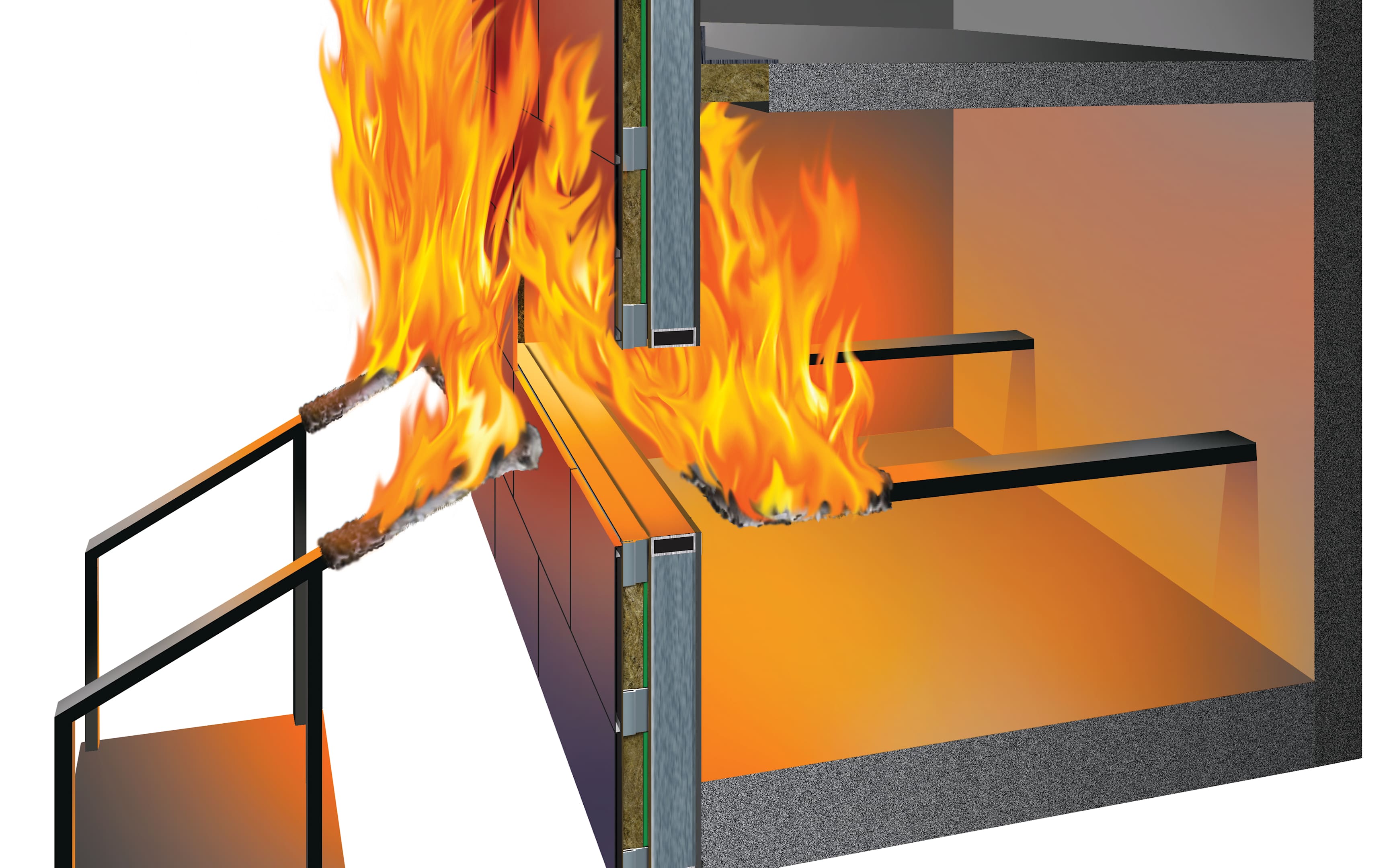
An engineering judgment can be issued by one of three parties: third-party testing laboratories, such as UL; fire-protection engineering firms; and the manufacturers of firestopping systems. Every engineering judgment should assess the basic required components:
1. UL or Intertek approved mineral wool insulation tested to ASTM E 2307
2. Mechanical support of insulation in exterior curtain wall
3. Backer bar reinforcement members (if required)
4. Compression-fit safing material
5. Approved mineral wool mullion covers for protecting the vertical curtain wall framing
6. Smoke barrier
A quality engineering judgment is a thorough one, based on a strong foundation of testing information. Since test sponsors — those who design and have ownership of the test data —hold the most complete information on their products and systems, they are often preferred sources for an engineering judgment.
Our mineral wool insulation brand, Thermafiber®, pioneered the concept of perimeter fire containment (PFC). We were testing PFC systems for decades even before we worked with UL to develop the first tested and listed PFC system more than 25 years ago. Our investments in PFC system testing have given us a rich repository of data to draw from. The greater the bank of information, the better our ability to correlate your specific system to existing test data, to provide the most accurate assessment of how your assembly would perform under fire test standard conditions. As makers of mineral wool insulation that serves as the work horse behind the PFC System — and the sponsors of testing — we have the detailed information, such as failure points and fastener positioning, that make all the difference in writing a quality engineering judgment. Our approach is thorough and conservative, and we know your project and every future occupant depends on the results of this critical assessment.
Conclusion
Engineering judgments are a critical part of the design process that deserve care, attention and access to the best data possible. A thorough engineering judgment developed by knowledgeable experts like the Owens Corning® Thermafiber Insolutions® team lends credibility and confidence to your PFC plans, reflecting the trust future occupants will place in your design every time they step inside.
Click here to request an engineering judgment from our team today.
UL is a trademark of UL LLC. INTERTEK is a registered trademark of Intertek Group plc.
© 2024 Owens Corning. All Rights Reserved.
Related Articles
Related Articles
Fire • Commercial • BlogMineral Wool Wall Insulation & Fire Safety

Fire • Commercial • BlogStone Wool Versus Slag Wool Insulation

Fire • Commercial • BlogThermafiber®, the Workhorse in Perimeter Fire Containment, Celebrates 90 Years
Fire • Commercial • BlogFAQs About Thermafiber® Mineral Wool Insulation

Fire • Commercial • BlogBalancing life safety, installation efficiency and design flexibility
Fire • Commercial • BlogNavigating Six Special Conditions in Perimeter Fire Containment System Design
Fire • Commercial • BlogDismantling 5 Common Perimeter Fire Containment Misconceptions

Fire • Commercial • Blog3 Components of Fire Protection for Balanced Life Safety

Fire • Commercial • BlogSix Critical Components of a Listed Perimeter Fire Containment Assembly

Fire • Commercial • BlogUnderstanding the SAFETY Act: Using perimeter fire containment systems to reduce liability

Fire • Commercial • BlogSix Critical Components of Engineering Judgments for PFC Systems
Jump to a Solution Suite
Jump to a Solution Suite