
- Fire
- Commercial
- Blog
Six Critical Components of Engineering Judgments for PFC Systems
Blog in Brief
An engineering judgment can be provided by testing labs, FPEs and fire containment manufacturers, and assesses how long a proposed but untested perimeter fire containment system will contain a fire between a rated floor assembly and non-rated exterior curtain wall. There are several critical components to consider during an extensive and thorough judgment process. These include that the judgment uses the most comparative tested and listed system as the basis of the engineering analysis and that all variances between the tested system and the project construction have been addressed and supported by existing test data. When test data does not exist, engineering judgments should never be used as an alternative to testing.
Six Critical Components of Engineering Judgments for PFC Systems
An engineering judgment (EJ) is a critical review of how well a proposed firestop assembly will provide a barrier to fire. Due to the ever-evolving world of architectural design, securing an engineering judgment has become a common occurrence in the submittal process. Rarely does a system match up exactly to the construction details. The EJ compares the proposed system to a similar system that has been tested and listed. An EJ can be issued by one of three parties – third-party testing laboratories that test and list PFC systems, fire-protection engineering firms (FPEs) and the manufacturers of firestopping systems. However, the owner of the testing data pertaining to a specific firestop system is considered the most credible entity to provide an EJ, as there are multiple elements involved with fire testing – including rate of decay of PFC structural members and material behavior when exposed to increasing temperatures. The nuances that are displayed during testing mean EJs issued by outside parties not involved in the testing could be questionable.
Owens Corning® Thermafiber® has established a set of six critical elements to review or consider when providing a high-quality engineering judgment for perimeter barrier systems:
- The EJ must accurately represent the project conditions and be project specific.
- In order to accurately evaluate the hourly fire resistance (F) rating, at least one third-party tested system – evaluated to ASTM E2307 – that closely matches project construction details has to be referenced as the basis of the design.
- Engineering judgments must include a full description of the critical components for the proposed perimeter fire barrier system and provide the design elements from the tested and listed assembly that are necessary to make that system function correctly. This may include the use of specific products with precise characteristics as not all similar materials use the same formulations or are manufactured in the same way. Differences among similar types of components may mean some products have not been tested and listed. The EJ has to be based on an interpolation of the previously tested system that is similar to the conditions being considered for a judgment.
- The purpose of an EJ is not to avoid testing a new type of fire containment assembly. Instead, engineering judgments that lack enough data to interpolate or extrapolate from – within the boundaries of good engineering design principles – should indicate the need for fire testing.
- An EJ has to specify that it is a judgment and that the system reviewed is not tested and listed.
- The evaluation during an EJ focuses on the joint between the slab edge and curtain wall. However, the system insulation, mechanical attachment and adjacent construction components are also a critical part of ensuring adequate perimeter joint performance.
Bonus criteria
The important role that a perimeter fire containment system can play in high-rise building safety in the event of a catastrophic fire highlights the great importance on elements considered when an engineering judgment is used. As such, we also abide by recommendations provided by the International Firestop Council (IFC) regarding the drafting of EJs. The following are some – not all – of the IFC’s specifications as presented in “Recommended IFC Guidelines for Evaluating Firestop Systems in Engineering Judgments.”
- Engineering judgments need to be based upon interpolation of tested firestop systems that either are sufficiently similar or clearly identify the elements used to make the judgment.
- Engineering judgments need to be limited to the specific conditions and configurations on which they were given. They must be based upon reasonable performance expectations for the perimeter fire barrier during those conditions.
- All the elements of a tested and rated fire containment system – including the project conditions where it is installed – create a single engineered unit and must be treated in that manner. Independent agencies, like Underwriters Laboratories (UL)® and Intertek®, test and list firestop system designs making references to specific components of each system as part of that listing.
Related Articles
Related Articles

Fire • Commercial • BlogMineral Wool Wall Insulation & Fire Safety

Fire • Commercial • BlogStone Wool Versus Slag Wool Insulation
Fire • Industrial • WebinarLNG Pool Fire Suppression & Cryogenic Liquid Spill Protection

Fire • Commercial • BlogThermafiber®, the Workhorse in Perimeter Fire Containment, Celebrates 90 Years
Fire • Commercial • BlogFAQs About Thermafiber® Mineral Wool Insulation

Fire • Industrial • BlogCombustible Liquids in Insulation

Fire • Industrial • BlogThe Behavior of Industrial Insulation in Case of Fire
Fire • Industrial • WebinarPassive Fire Protection Systems Webinar

Fire • Industrial • BlogMitigating LNG pool fires using passive systems
Fire • Industrial • BlogFire testing takeaways to consider when selecting insulation for fire protection

Fire • Commercial • BlogBalancing life safety, installation efficiency and design flexibility

Fire • Commercial • BlogNavigating Six Special Conditions in Perimeter Fire Containment System Design
Fire • Mechanical • BlogProtecting life safety in plenum spaces
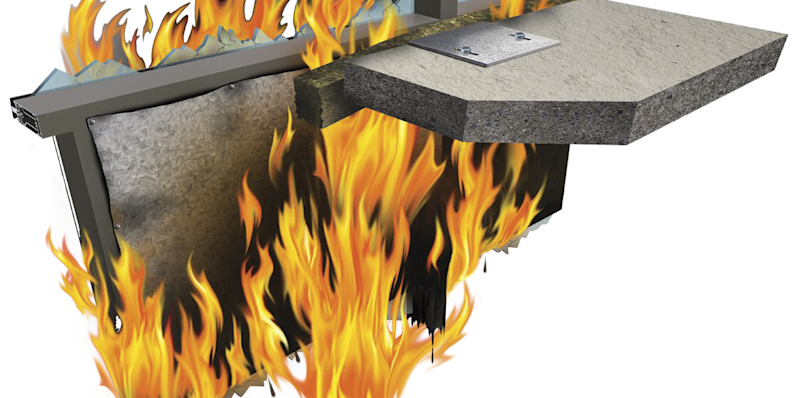
Fire • Commercial • BlogDismantling 5 Common Perimeter Fire Containment Misconceptions

Fire • Commercial • Blog3 Components of Fire Protection for Balanced Life Safety

Fire • Commercial • BlogSix Critical Components of a Listed Perimeter Fire Containment Assembly

Fire • Commercial • BlogUnderstanding the SAFETY Act: Using perimeter fire containment systems to reduce liability

Fire • Commercial • BlogSix Critical Components of Engineering Judgments for PFC Systems
Jump to a Solution Suite
Jump to a Solution Suite